
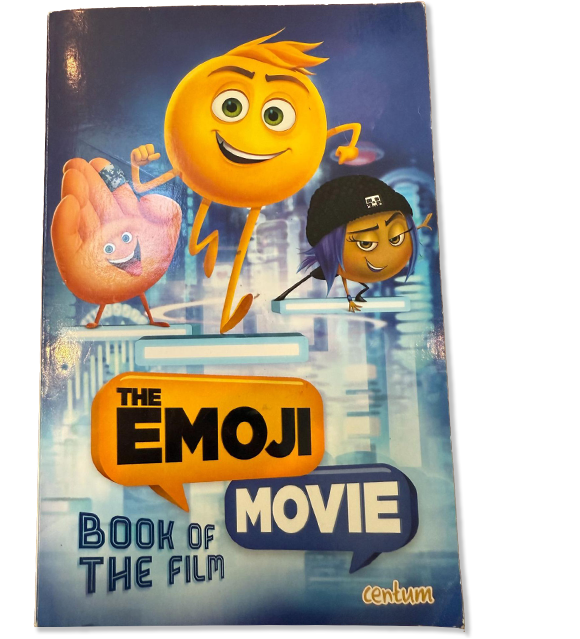
I read The Emoji Movie: Book Of The Film. The Emoji Movie: Book Of The Film is an insult to films and books and emojis and the idea that we owe each other anything as human beings … with one exception.
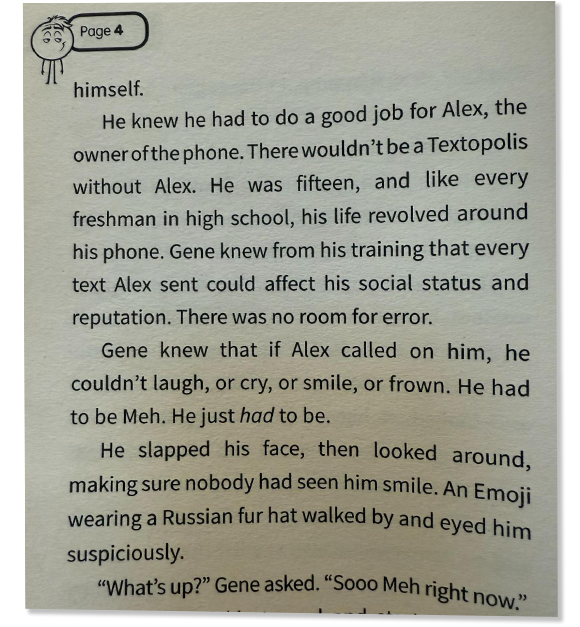
My dearest Hotdogger: I have a promise. I promise my exploration of this book reveals a hero. There is one (1) hero. However, we have villains and scavengers and one (1) madman to sift through first. I did not expect that much material and depth to come out of reading The Emoji Movie: Book Of The Film. I never expected to go up my own asshole with big questions about the value of art, and the way culture reflects our social contract, and I could keep blathering but I’m telling myself to tighten up. Keep it on the rails Alex. Hi, I’m Alex. It turns out The Emoji Movie’s main character is named “Alex”.
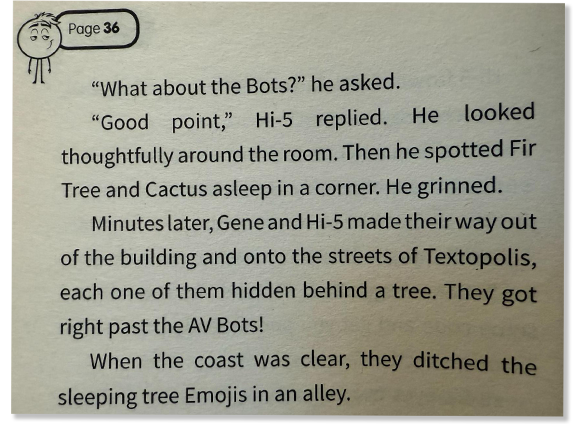
We have several layers of crappification to explore. Starting on the surface, I’ve never seen The Emoji Movie. I never will. This book is my new additional reason for shunning the film. The Emoji Movie: Book Of The Film reads like someone putting The Emoji Movie on their second-best laptop screen, typing a description of what happens without pausing or caring, and then e-mailing that along with an invoice. The Emoji Movie: Book Of The Film is bare descriptions of the events in the movie. The movie is apparently mostly lazy sight gags. For example, the characters escape a situation by hiding behind trees. Because this is The Emoji Movie, the trees are the emojis for trees. That’s the entire gag. The book is those sorts of non-gags, rendered in plain text as bare facts.
This single pointless gag style repeats throughout the book. Two emoji kiss, therefore they sprout heart eyes. An emoji receives a judicial sentence, therefore the sentence comes from a gavel emoji. One character says their mood is dour, therefore the Flamenco Dancer emoji appears out of nowhere to do flamenco. The logic of this joke is that Flamenco is the opposite of dour, and one emoji is a lady dancing in a red dress. What I’m writing out, right here, is exactly as lively as this book. It’s also a book starring an emoji who is the emoji for “meh.” The book is somehow more meh than its protagomeh.
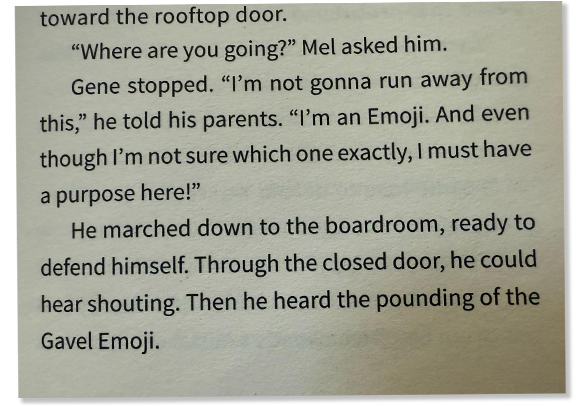
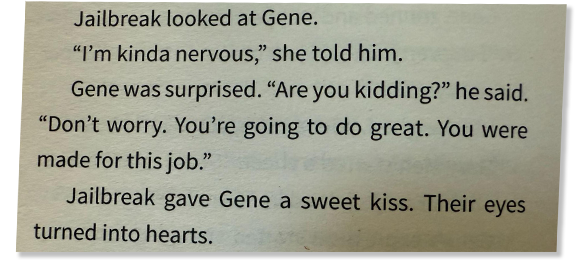
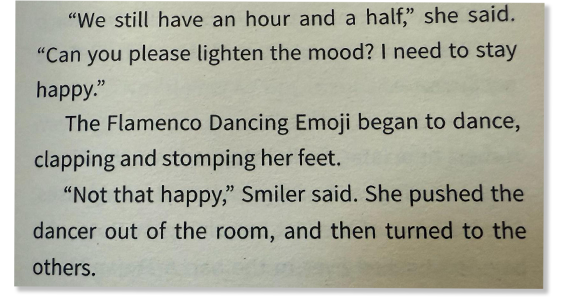
We’ve reached a fork in the road. You may wonder whether the book is bad because of the movie’s script, or the author’s choices. You may answer this question by watching The Emoji Movie in its entirety. I chose another path. I decided to not care. I refused to watch the movie even though in this situation it’s arguably my job. The makers of The Emoji Movie should be crushed to learn Alex Schmidt won’t stream their film, for pay. The Emoji Movie should be geared toward me. I’m a curious person. I love animated movies. And I’m so interested in emoji, I proposed the creation of the bison emoji that is now on your device keyboard. I am the reason I can type a bison in this line of text right here: 🦬. And then another bison: 🦬. And another bison: 🦬. “Let there be bison!” is my fingertips’ godlike cry: 🦬🦬🦬🦬🦬. Also, should I have punctuated any of those bison emoji with a period? Or should I let the bison stand tall as the end of each sentence? I don’t know. We’re all making up emoji culture as we go. That freshness is yet another reason The Emoji Movie did not have to suck. It could’ve approached the level of The LEGO Movie. It did not, for many reasons. One reason is The Emoji Movie’s total disinterest in emoji, texting, or reality. It’s like they unfroze a guy from the 1980s to script this. He lacks any concept of which emoji people use. For example, his main character is an emoji that does not exist:
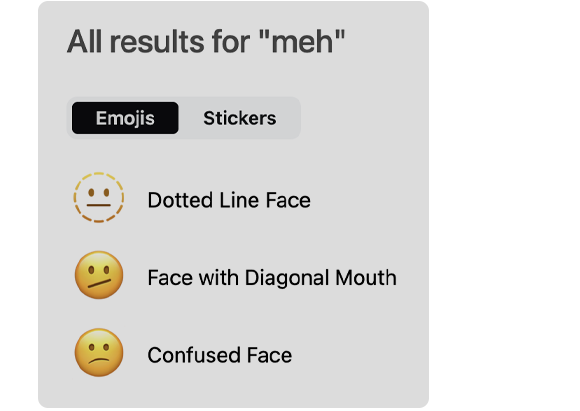
It gets worse. They pair “Meh” with a best friend named Hi-5. Hi-5 is a high five emoji, apparently, even though high fives are a muddled concept in the actual emoji keyboard. Hi-5 is also alienating, because this movie makes it a hand with a face in the middle of the palm. Then they add a distracting bandage on one finger. But the big problem is the palm-face. Zero emoji are a hand with an internal palm-face. If that existed, no one would use it, except for weirdos, which is everyone, so now I’m thinking that needs to be an emoji. Anyway as of the Emoji Movie era it didn’t exist in life or in anyone’s mind. Beyond Meh and Hi-5, our remaining main character is a girlfriend slash quest prize for Meh. She is a Princess emoji, disguised as a brown-skinned skater/hacker. Her name is Jailbreak. She lives in a phone app named Piracy. This makes her something no one could ever type, inside an app no one’s ever created. Also in the world of this book/movie/blur, the Princess emoji is a supreme ideal that other emoji respect to the point of worship. The various Princess emoji are some kind of deified pharaonic god-queens, within Textopolis. Stop me if any word I just typed reflects emoji in reality. Thanks for not stopping me.
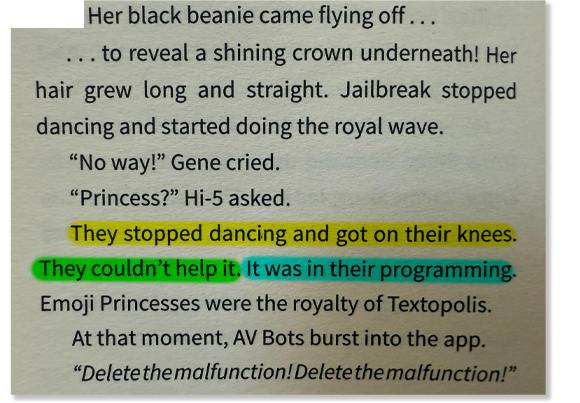
Here is the plot of the stenographer’s summary of The Emoji Movie: Alex is a teenage boy who likes a girl named Addie. Alex is too bashful to share his feelings for Addie. Luckily, Addie initiates a text conversation with Alex while he sits around. Addie leads with a text message of a lone smile emoji. That’s her entire text. One smile emoji, out of the blue. Horrifying. This girl has the emoji habits of a stalker/murderer. She texts like she’s masturbating [negative connotation] behind your hydrangeas.
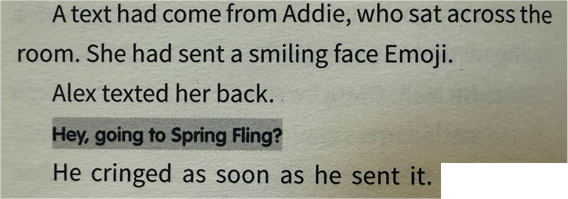
When Alex replies to just-a-Smile with the question “Hey, going to Spring Fling?”, Addie replies “You?”, because that’s barely cogent. It either implies she is going or not going, which is super clear……… [Activating Wayne’s World Impression] … not. Then Alex’s friend Travis intervenes. Travis claims emojis can only achieve one vibe, because that’s what Unfrozen Boomer Screenwriter presumes about the world.
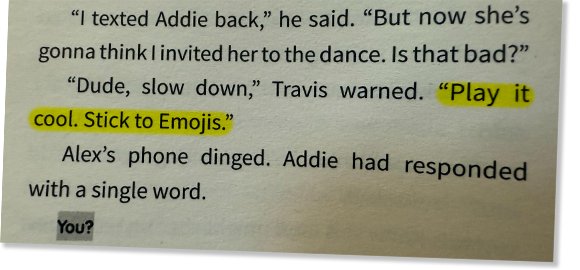
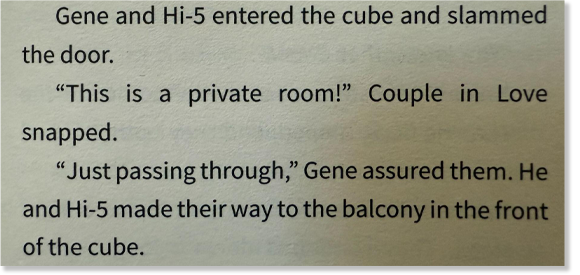
Alex follows this advice, and tries to type a single pointless “Meh” emoji. No audience would ever care about this or understand it because, again, the “Meh” emoji does not exist. That means the storytellers need the audience to Mandela Effect themselves into this scenario being realistic. The storytellers also count on this to pay off oceans of previous setup. For entire book chapters before this, we’re led through the whole deal of our protagemoji. His name is “Gene”. Gene is the son of a male Meh named Mel and a female Meh named Mary. This is the first of three instances where the canon of this book spells out emoji sexual reproduction. The other examples are more carnal. Later on, this book describes a sight gag where emoji flee through a private room inside Alex’s cell phone, and disturb a “Couple In Love” emoji who were about to smash.
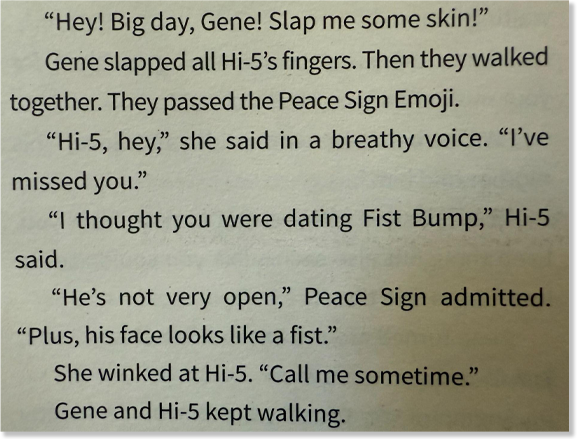
Then at the end of the story, Hi-5 gets handed a Wacky Girlfriend For Best Friend Character out of nowhere. That plot device is regular rom-com stuff. In the hands of Richard Curtis or Nora Ephron, it works fine. In the hands of The Emoji Movie: Book Of The Film, it’s an anatomical boondoggle. Hi-5’s instant mating opportunity is a female (?) Peace Sign emoji. Peace Sign implies she wants all five of them Hi-5 fingies up in her gaps. She also almost rules out fisting.
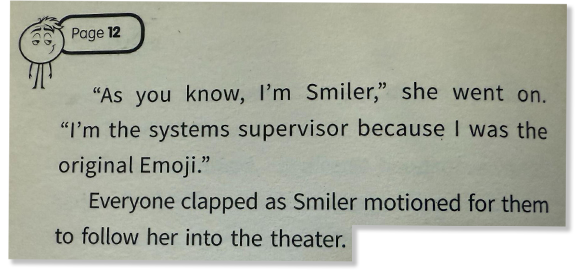
Gene is the son of two Mehs. According to what I can only describe as Eu-moji-genics, Gene must match his parents’ exact “Meh” output whenever he is texted by Alex’s phone. Turns out this emoji world is a police state with a planned economy and a caste system. Mehs must Meh. If Gene fails, a domineering emoji named Smiler will delete him. Also Smiler self-describes as the first emoji ever created. However, she is a yellow smile emoji with lots of lipstick and a giant blonde coif. The movie claims a blonde bombshell gal’s face is the first emoji ever generated. Get the hell out of here with that random canon. If we all lived in an alternate universe with an oppressive Stepford matriarchy, its typical emoji would still be a plain round smiley face. Also probably white. Totaling up these failures, I award this book one bonus point for making the blonde woman emoji Nazi-coded, and zero regular points for everything else.
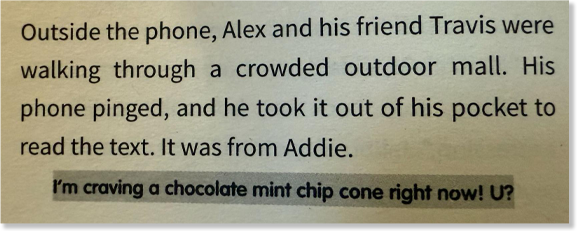
After wearing us all out with an enormous amount of uncanny world-building, The Emoji Movie: Book Of The Film pays it all off with one text message. Alex wants to reply affirmatively to Addie, without seeming too excited. So he chooses Meh. The phone summons Gene as that Meh even though Gene is known to be [shudder] “multi-expressional.” Therefore, Alex’s text reply to Addie is not Meh. Instead, he texts a Gene face that cycles through endless different expressions. The result of this error is a lot of chase-around faff inside of Alex’s phone. Gene flees genocidal execution bots. Meanwhile, in the Teen World, none of it matters whatsoever. After about 100 book pages of Tron-moji stuff happening inside of Alex’s phone, the story reveals a next exchange between Alex and Addie, initiated by Addie, where she still likes him and everything is fine and she’s the one pushing for a relationship. Despite Alex’s faux pas, despite Alex being inert, Addie craves cone.
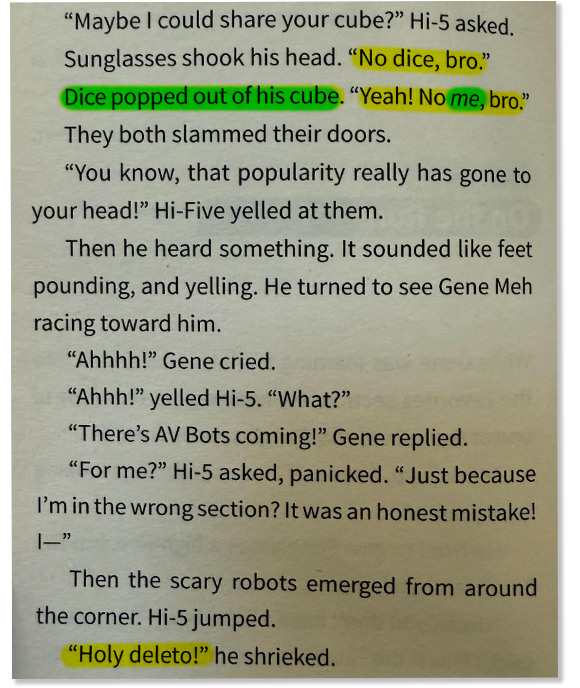
Alex is at the mall to visit its phone store (thrilling!) to reset his phone. He does this because the phone is being weird, in the sense that a bunch of inside-the-phone events made the phone play a disco song out loud in Alex’s science class. Cringe!!!! Also, one of those inside-the-phone set pieces features the statement “Holy deleto!” Re-reading “Holy deleto!” interfered with my dreams last night. I bolted upright in a cold sweat, while thinking the phrase “Holy deleto”, because my middle school principal said that to me in my dreams. If you read that phrase one more time you too are doomed to my fate. You’re also doomed to see the joke written right before “Holy deleto.” It’s a joke where someone says “No dice”, and then a Dice emoji bursts in to say “No me.”
Finally, Addie hunts down Alex while they’re both at the same shopping mall, to thank him for sending the same multi-expressional Gene emoji he’d sent before. It’s the same text message from before, again. The book explains why this is a powerful expression of Themes Such As Love.
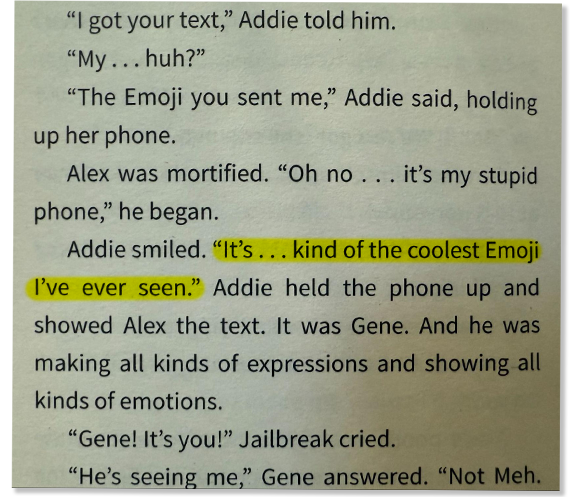
Alex asks out Addie. Gene convinces Jailbreak to not depart for The Cloud after sneaking through The Firewall because if she stays in Textopolis they can make sweet (interracial?) emoji love. Smiler receives no punishments and announces Gene is the world’s first omni-emoji representing all things. That’s great news. We all want one emoji that means everything in a way that means nothing. That way? Individuality.
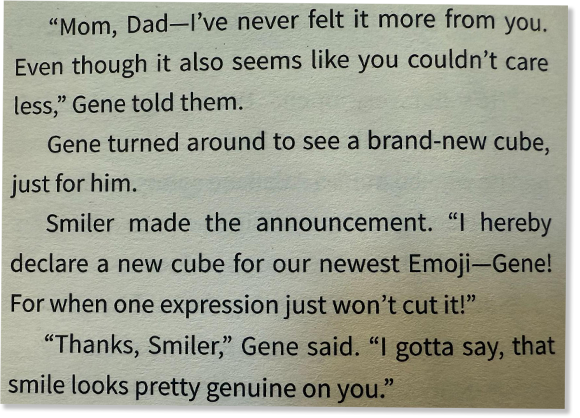
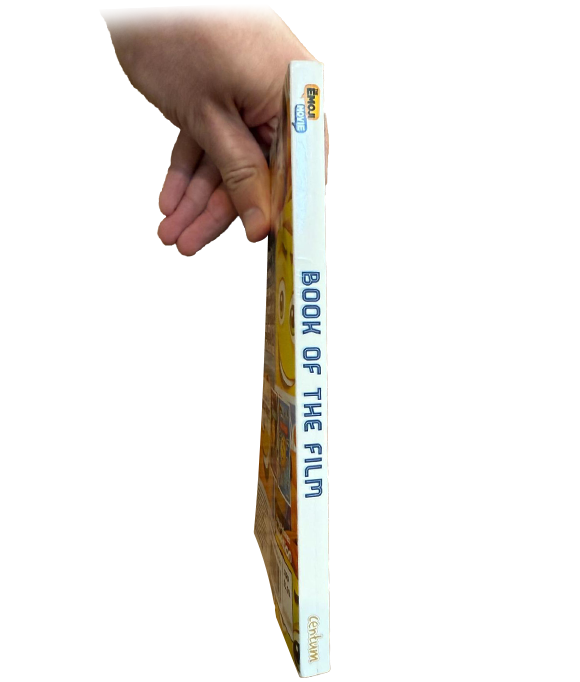
Is this book crap because the movie is crap? Yes. Is this book also crap because the author didn’t try? Yes. Most novelizations make at least a little of an effort to flesh out the movie, or at least describe the events of the movie in the way that fits the page. This novelization refuses to novelize anything. It doesn’t even call itself a novelization. It calls itself The Emoji Movie: Book Of The Film, in a savage act of exploiting the broad way dictionaries define the word “book”. This is such a non-book, the publisher doesn’t know how to print the spine. The dominant spine text is “BOOK OF THE FILM”. Who makes that mistake? You might convince a kid to buy a book called “The Emoji Movie.” You’ll never convince them to buy a book whose spine looks like a Leonard Maltin’s Movie Guide re-titled by Borat.
How did that spine mistake happen? This is not a book from a book publisher who handles words. My new frenemy “Ruckus Causer” suggested this book to us on the Discord. Ruckus Causer gets a “fren” on the front of my classification because they provided more than a basic tip. They revealed that the publisher of The Emoji Movie: Book Of The Film is a company specializing in sticker books. Sticker books have value. For example, when I get my future hardcopy of Brockway’s wonderful next book, I’ll have to DIY the promotional tie-in imaginary friend stickers on my own damn Cricut. Dammit! A sticker book would save me that labor. However, sticker books are not what I would call “books”. The “sticker” part invalidates the rest. If sticker books are books, clown cars are roomy. Books are made of words. Sticker books are made when a machine shits and collates clip art.
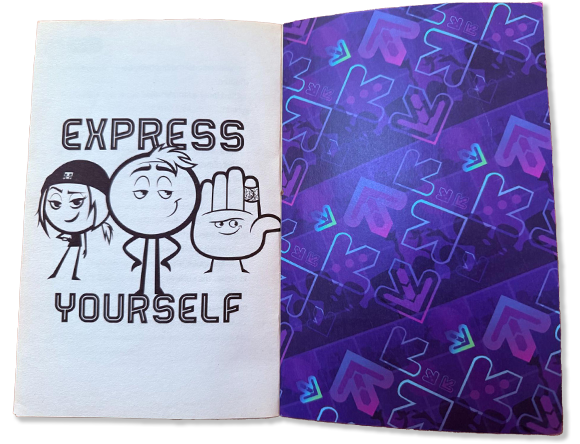
For these reasons, the publisher of The Emoji Movie: Book Of The Film shows their ass throughout the product. There’s a middle section of glossy pages that are definitely single sticker designs sized up like splash panels. There’s screwy margins on the back cover text. Also the insides of the front cover and back cover feature stolen art. There’s two whole pages of the on-screen arrows from Dance Dance Revolution. Stunning stuff. Even your most out-of-touch uncle understands “Dance Game Robloxlution” is different from emoji.
Does the book plug in extra character images, to make up for its lack of everything else? Yes it does. They also stuck a little drawing of Gene or Jailbreak on every upper page corner. However, it’s the same drawing throughout the entire book. So nothing happens when you flip-book the corners. These damn sticker jockeys have no respect for the legacy of Animorphs.
Let’s meet further villains. This is a failed novelization of a failed movie because the idea is a bone-deep cash grab. The Emoji Movie was a hot idea in 2010s Hollyweird. Sony Pictures paid more than a million dollars for this movie pitch, to win a three way bidding war. Perhaps that lavish price would make sense if the emoji concept belonged to anybody. However, emoji do not belong to anybody. A nonprofit called Unicode organizes the emoji keyboard, for free, for everybody. The only element anybody owns is the specific art commissioned by device platforms and tech companies. The art is IP in the same way fonts are IP. But emoji belong to everybody, in the same way letters and numbers and punctuation belong to everybody. So the idea for an Emoji Movie is FREE. Sony did not need to buy the rights. They didn’t get bilked out of the Smiley Face I.P. by a rent-seeking jerk like John Q. Emoji, or Emoji Comics, or the failson inheritor of the artistic estate of Stan Leemoji. Sony simply turned a guy who pitched “an emoji movie” into an overnight literal millionaire. They did that even though “an emoji movie” was all the guy fleshed out. I swear I’m not kidding. The genesis of The Emoji Movie concept was a C-tier animation writer receiving a text message while thinking about how much money Toy Story made.
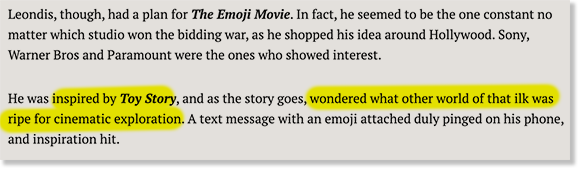
This is why every emoji in The Emoji Movie is unrecognizable. The studio wanted to merchandise the Emoji Movie characters. But the characters are something they did not own (emoji). They couldn’t turn public emoji into different ownable characters without making them unrecognizable. So they centered the movie around new unique “emoji”, which don’t exist, which ruins the entire “relatable” hook of an Emoji Movie. Then Sony hurried every step of making the movie, because they worried emoji might flame out as a fad before they finished animating. Extra problem: shortly after the film’s release, it turned out their lead voice actor is a violent sex criminal or a victim of botched brain surgery or both. Oops! That dents the ol’ DVD sales a bit. It also fits T.J. Miller’s decision to do The Emoji Movie in the first place. Miller bolted a stable AND beloved AND easy television acting job so he could voice a character in The Emoji Movie, as if there is not time in his year to do both things. He did that with no further work lined up. He lost his one other job when His Crimes came to light. So, uh, wow! Hard to imagine how T.J. Miller found his voice for this emoji character. How did T.J. Miller find a way to perform the Emoji Movie character of “can’t stop toggling between all sorts of different emotions”? Insert grimmest emoji here.
So there you have it: the most commercially driven movie concept of this century, and the bleakest comedian who’s not quite famous, teamed up to make a crap movie. Then a sticker company cranked out its not-a-novelization. Everyone involved is a monster or a glorified photo printer. Yuck. Awful. But wait: Alex (the writer, not the flat CGI homuncu-boy from Emoji Movie) promised you a hero in this story. Alex (the writer, not the hideous work of outsider art satirizing America’s low standards for its white men) is not a liar. So there must be a hero here. Who could that hero be?
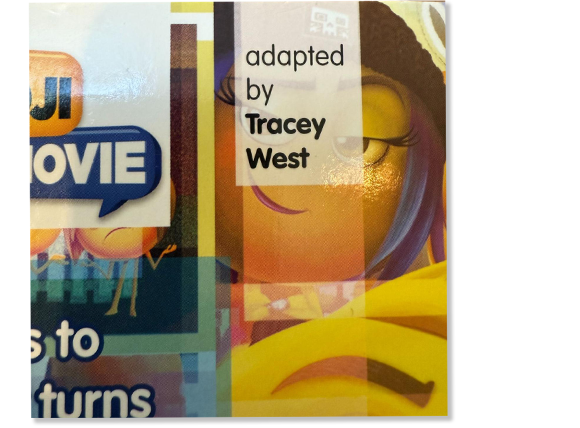
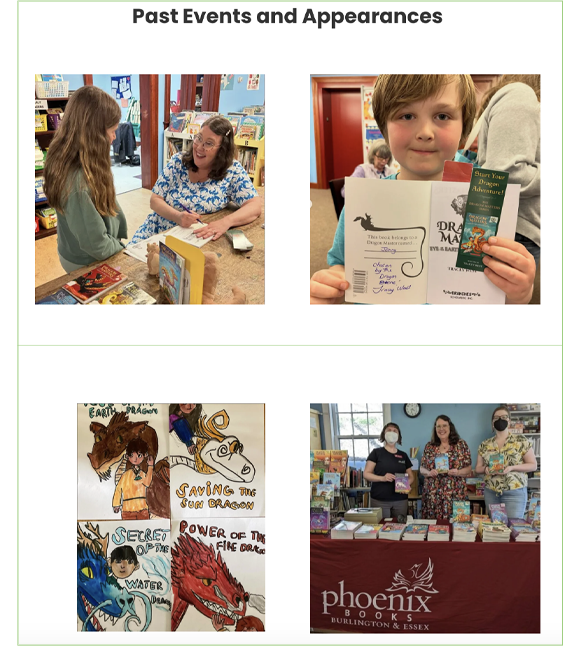
I know what you’re thinking: how could the writer of The Emoji Movie: Book Of The Film be a positive figure? Answer: she did this gig exactly how a moral and ethical person should. Tracey West couldn’t prevent The Emoji Movie from existing. She’s also the author of more than 200 children’s books. She professionalized long before a sticker company needed two warm hands to type something. Surely the sticker people pitched Tracey, not the other way around. Therefore she could demand the highest reasonable rate. She’s a professional. She even snagged a credit of “adapted by”, instead of “written by”, because that protects her real books from this paycheck. So I’m a Tracey West supporter. I say all that without knowing Tracey West personally. All I know is her main passion is writing books, containing original stories. Her biggest hit series is books about dragons for young readers. She’s writing the exact kind of fun books for home reading that paper over the holes in our local education budgets. Tracey also maintains a rigorous multi-state schedule of live bookstore appearances, where grateful children bring her their dragon book fan art. They show Tracey their art. Tracey makes them glad they drew it. Tracey also runs a roving book wagon for her rural Catskills region. Wow! She’s New York State’s Dolly Parton? And maybe most honorable of all, her website link to her X dot com account is busted.
We’re all sinners. I feel Tracey West balances her sins out with these good works. And she did a good work for me without even knowing it. The Emoji Movie sent me into a tailspin of wondering whether the final gasps of American culture will be a bucket o’ crabs. I wondered if the last works we fart out will come from vandals and scavengers on the fringes of entertainment’s machines. And as I wobbled on despair’s edge, Tracey West steadied me. She reminded me good people exist. She cashed this paycheck, after a maximum of half a day of labor. Then she converted those dollars into the lovelier currencies of “original concepts” and “tangible joy.” So thank you, Tracey. You’ve given me the strength to pick myself up, gear myself up, and hunt down the Homunculus CGI Character Alex who may step into our reality out of a technological hell gate. Alternatively, I’ll go have a snack. Either way: 🙏.
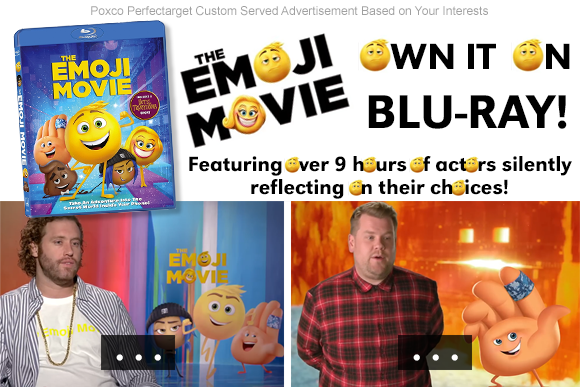
This article was brought to you by our fine sponsor and Hot Dog Supreme: John Dean, the kinda guy that’d 🍆😳👉👌😵💫💦🫣🧻but 🍒😏🥚💧🍌🫣🍯😬🍞🫗🐌😶🌫️🧂😵🫡 if you know what I mean.
2 replies on “Nerding Day: The Emoji Movie Book Of The Film🌭”
Nice to see Tracey mentioned. My kid reads her books. Got introduced through her pokemon adaptations and found she does original stuff. She seems nice!
The Dance Dance Revolution stuff is there because it plays a big role in a scene in the movie.
I know this because I’ve seen this wretched thing at least a hundred times. I’ve probably seen it more than I’ve seen all the Star Wars movies combined, and as an 80s kid, that’s quite a few times.
I actually know most of the dialog by heart, because I’m occasionally expected to supply the correct response to a another line.
You see, my nephew who lives with me is autistic, and this was one of his top five favorite movies for many years. (The other four are Cars, Frozen, Shrek, and Moana, so the kid does have some taste.) And since he’s mostly non-verbal, when he started trying to say lines he remembered, it was actually a pretty big deal, and had to be encouraged. (Though I did often try to see if he’d let me off with just singing “You’re Welcome” for the millionth time, but when he latches on to something, it’s very hard to distract him.)
Thankfully, The Emoji Movie has kind of fallen off his radar; these days he’s much more invested in a different yellow cartoon guy and his oddly shaped, not too bright, pink-ish sidekick, and SpongeBob and Patrick are a lot easier to take.