Categories
Nerding Day: Move Your Dead Bones
 1-900-HOTDOG
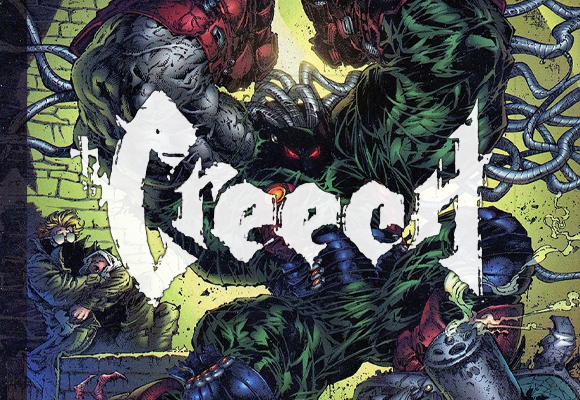
I tend to think of the mid-2000s as Peak Edge. After all, that’s the era that brought us Shadow the Hedgehog (the character), Shadow the Hedgehog (the game where a hedgehog shoots people with guns), and Bomberman: Act Zero. Remember when they tried to make an adult, hardcore Bomberman who says cusses? Shadow the Hedgehog remembers. He remembers everything, though there is so much he wishes he could forget… (CUE LINKIN PARK – IN THE END)

But there is truly nothing new under the sun. A decade earlier, edgy darkness was all the rage in the world of comic books thanks to the birth of Image by a disaffected group of artists who left the Big Two houses to start their own publishing company. One with drugs, and guns, and countless pouches, all presumably filled with drugs and/or guns! I tell ya, these Youngblood kids got more pouches than a Toluca Lake trout fisher’s vest, babe.
Grunge was on the airwaves and every comic book character was a chain-smoking, chain-wearing antihero. Spawn was the hottest thing since BoKu. Everybody loved him! It was like Everybody Loves Raymond, except with slightly more nudity and disembowelment. And thus, like a disgruntled protagonist’s cigarette burning through a newspaper headlined “World Doomed, Ineffectual Dogfucker Congressman Says,” the edgy darkness birthed by Image spread across the industry.
DC killed Superman and people were naïve enough to believe it actually meant something! They broke Batman’s back to try and keep up with the MacFarlanes and that’s why people are still doing impressions of a Tom Hardy performance to this day! Lobo was invented as a parody of grizzled fuck-off types and got over as an unironic cool dude! Fucking Lobo, who looked like Gene Simmons went on gear and read a single book on Rastafarianism in his freshmen year at NYU!
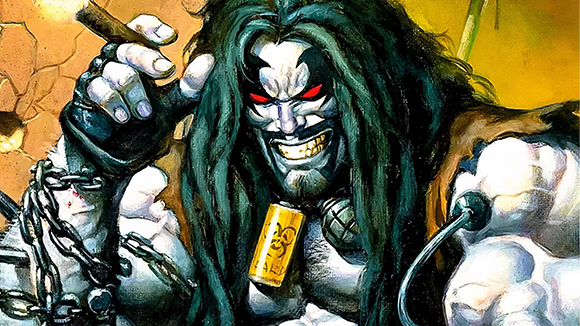
But who is the all-time edgiest superhero? Is it Spawn, returned to life by Hell’s infernal might to punish evil? Deadlock, who is Wolverine but also a vampire terrorist? Or Knifetime, whose every use of his blade powers tragically shortens his lifespan?
I think I’ve found the answer. He’s called The Creech.
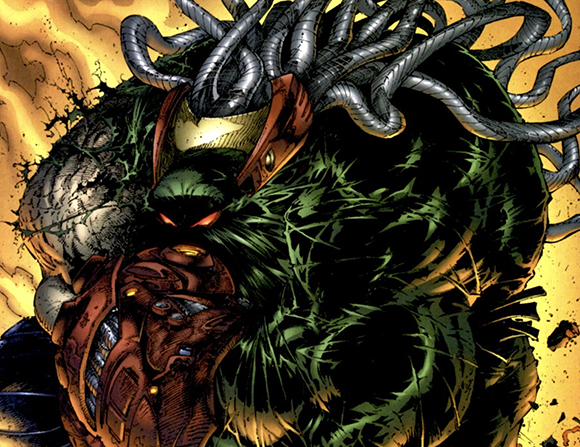
Created by Greg “What if Batman Was Da Joker and I Guess Also Spawn‘s Whole Look” Capullo in 1997, The Creech only ran for three issues. But hey, he got a MacFarlane action figure, so that’s something.

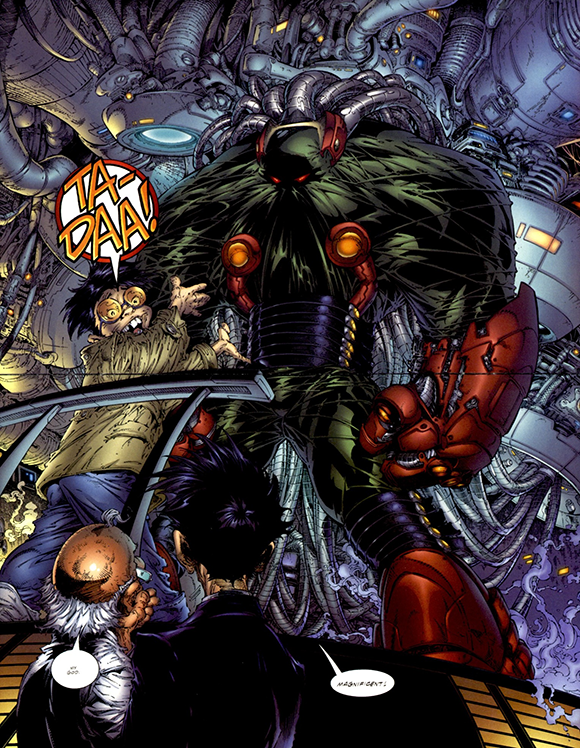
In plastic he looks like a Resident Evil monster that doesn’t realize why his haircut is offensive, but on the page, The Creech really comes alive as the love child of Omega Red and the Hulk.
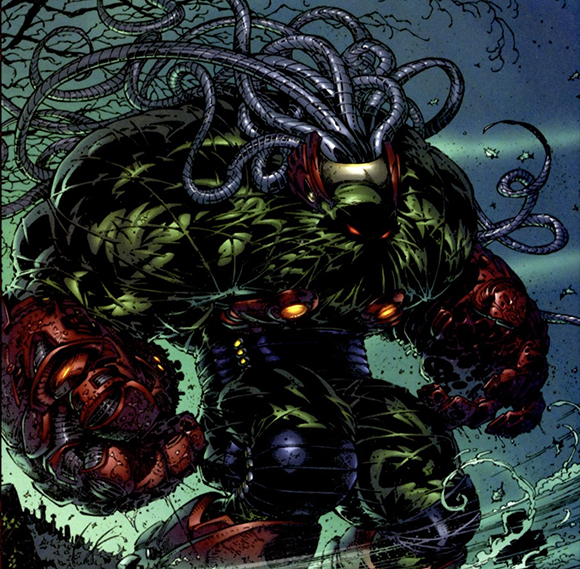
The Creech’s powers are large and large. He is the product of a genetic experiment to develop a version of Meatwad from Aqua Teen Hunger Force that can beat ass. But he was created to help mankind, not destroy it.
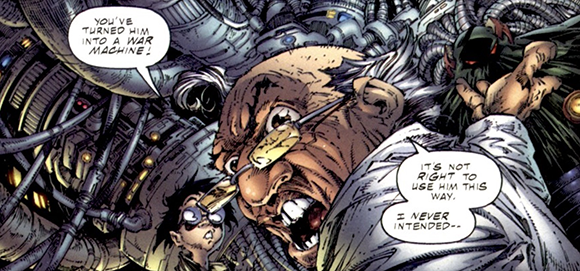
Or like, to be a tabula rasa or something? He’s half man, half alien, half Biblical Adam, half Creech, all Creech.

Doctor Battu created The Creech for reasons we’ll get into later. But his project was usurped by Dennis Dross and his minion, Bernard Chen. Dross looks like your typical evil ’90s suit. Chen looks like Greg Capullo was in a racism contest with a 1940s Disney animator and won in a stunning upset that was a heartwarming story for underdogs everywhere.
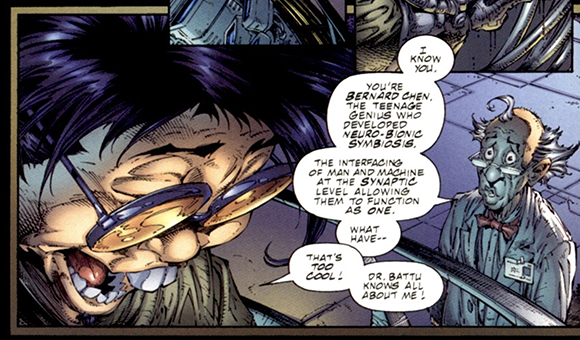
I know that looks bad. But try to remember that it was— wait, I’m reading this again and it says 1997? Huh. Well, Greg was probably a young man who didn’t know any b—
Oh. Well, if it makes you feel any better, Chen isn’t actually evil or anything. He’s just really, really excited about making a bioweapon out of someone else’s clone son.
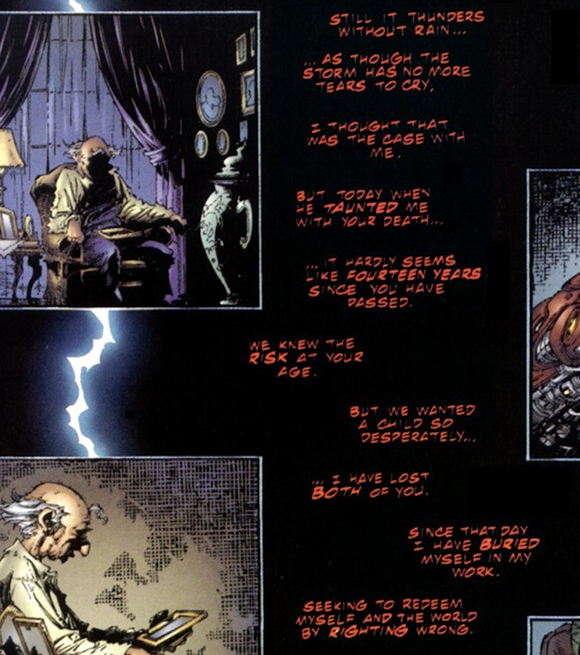
Battu’s motivations, meanwhile, are less scientific. Haunted by the simultaneous loss of his wife and baby, he has created life in an attempt to make right what once went wrong.
But the public just hates Battu’s work.
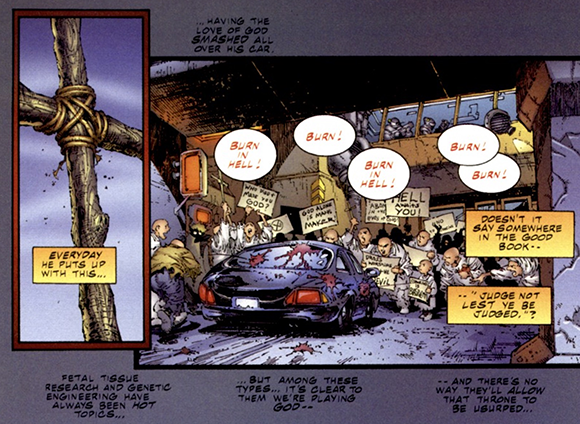
What’s that about fetal tissue? Is my dude using stem cells to do his nasty business? Oh, sweet, gentle reader. The Creech comes from the mind that brought us 50% of Batjoker. It’s ever so slightly more twisted than that.
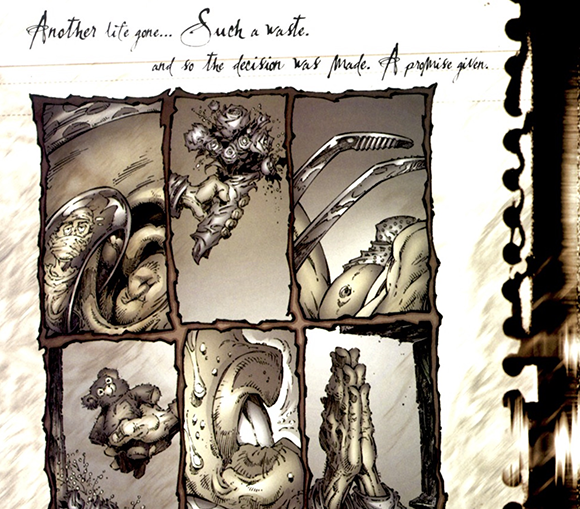
Are you getting the idea?
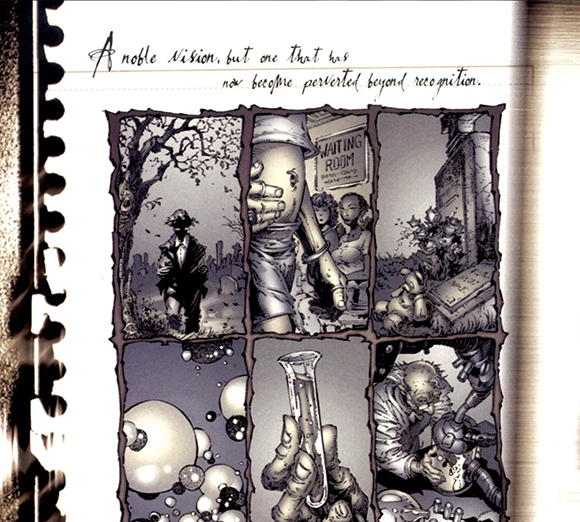
Here, let’s have Dross spell the whole thing out in a villainous monologue.
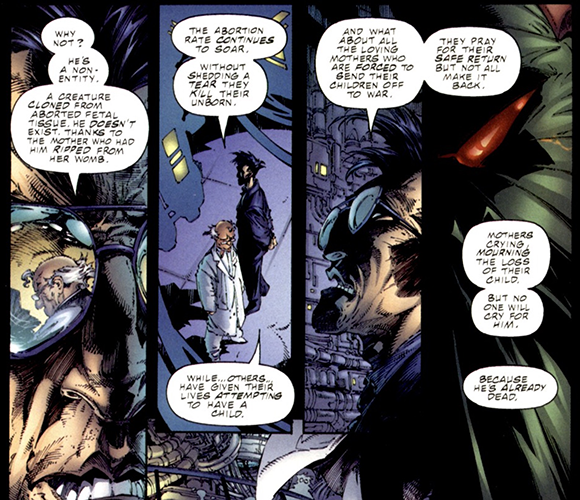
Yes, The Creech is a fetus Frankenstein. An abortion Avenger. A pro-choice Punisher. Chris Field is so mad he didn’t come up with this.
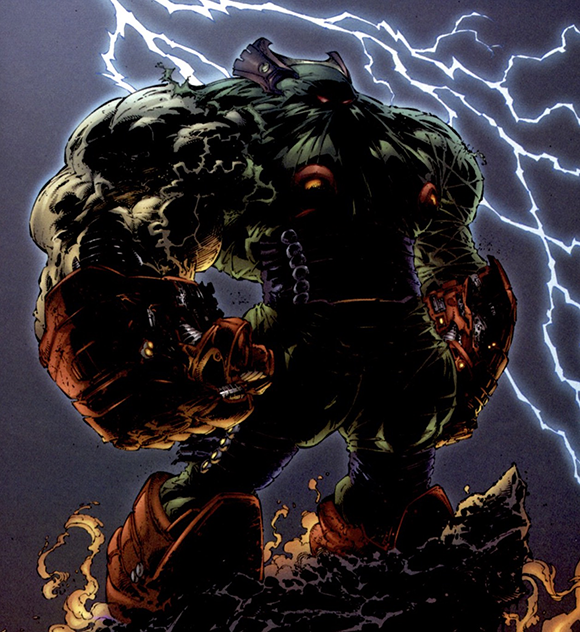
In order to make things right with his dead wife, Dr. Battu performed countless abortions and then scooped the medical waste out of the trash and smushed it together into a huge dude-shaped pile. It’s unclear if there was a box the patient had to tick to say they were cool with it or not. Kind of fucked up if there wasn’t. Ever heard of informed consent?
Dr. Battu works for The Agency. Sorry, it’s actually The A.G.E.N.C.Y., because Greg Capullo never saw a hat he didn’t want to adorn with another hat. What I’m saying is that Greg Capullo has the worst case of Hatris I’ve ever seen. The A stands for “Agency”, by the way.
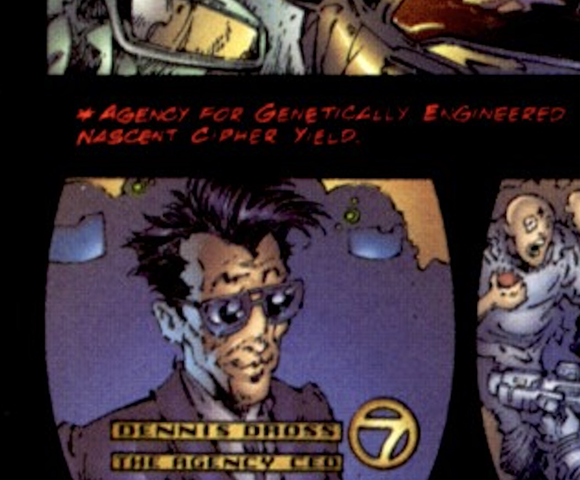
The Creech was the first thing Greg Capullo ever wrote, and it shows. Shoehorning abortion into the story is an amateur’s attempt to make a statement, but The Creech emphatically does not make one, and the implications of its titular character being a fetal chimera are never explored in any way. Greg evidently got bored with the concept almost as soon as he introduced it, since he brings aliens into the mix next.
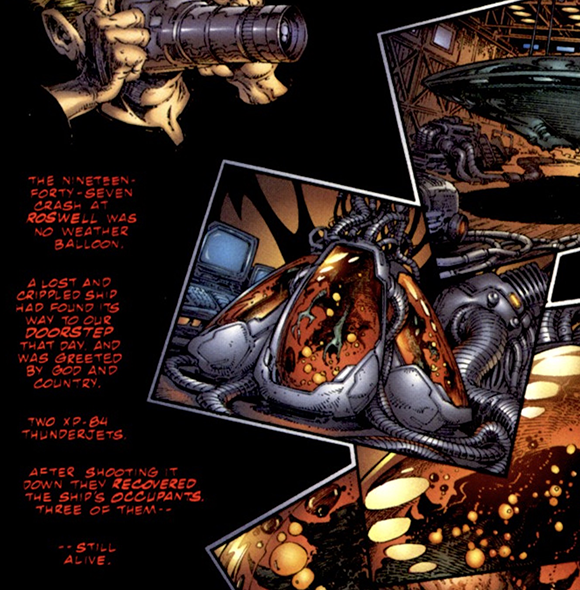
Battu brings this journalist, Chris Rafferty, into the lab to take pictures of the monster, the aliens, and their spaceship. Chris has one defining characteristic: he won’t shut the fuck up about Walter Cronkite. That’s literally his entire deal.
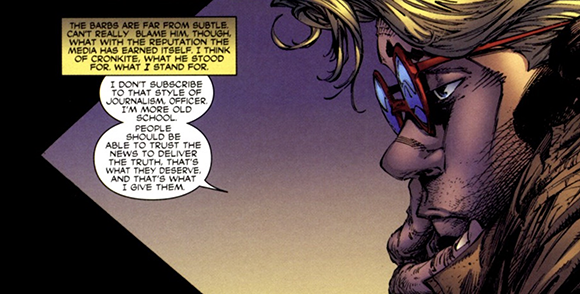
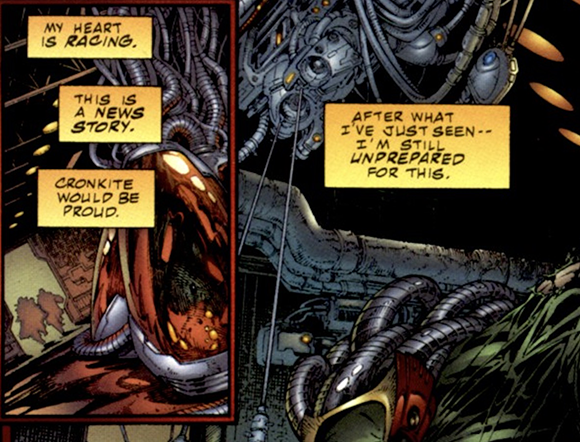
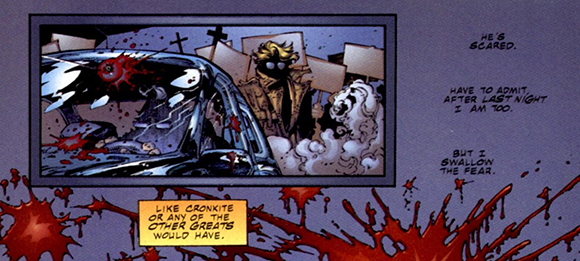
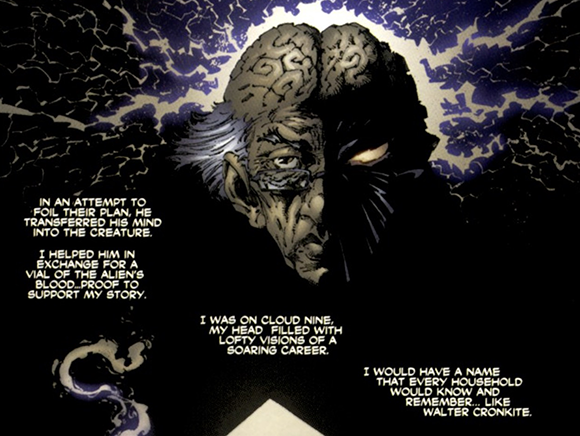
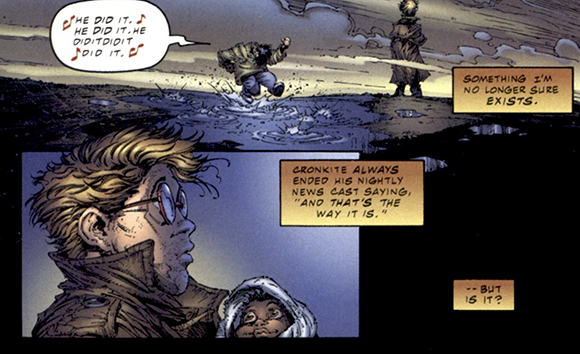
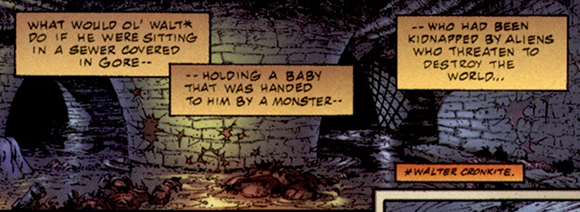
Chris is the worst. His dream is to be or at least suck off the then-still living Cronkmeister. He believes that getting photos of real aliens will bring him closer to this goal, which, I guess probably it would. Battu gives him a speech about how like, things aren’t real, maybe? We just think they are, or something.
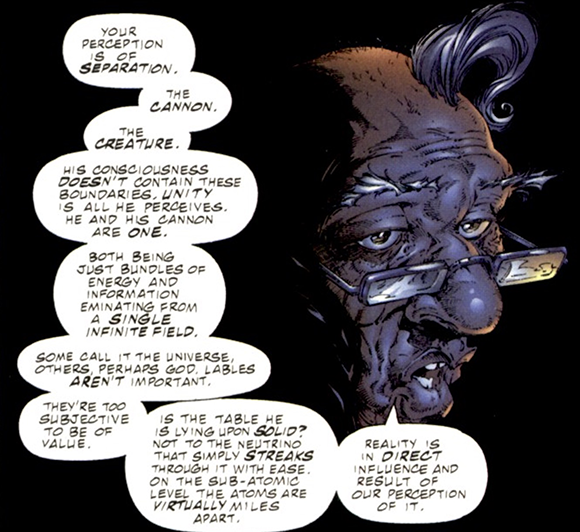
Between this and the abortion stuff, it feels like Capullo took half a semester of Philosophy 101 and decided he’d learned all he’d ever need to know. Not even a good class, either, the kind where you mostly just discuss episodes of The Simpsons because the professor is too busy building a future #MeToo case against himself to bother actually teaching.
Battu’s plan is to “ruin” his clone son’s utility as a living weapon by transferring his mind into its body. Unfortunately, Dross shows up, kills Battu, and captures Rafferty. The Creech, however, escapes. And here I want to take a second to just appreciate how unapologetically, unflinchingly fucking ’90s the graphic design of this comic is.
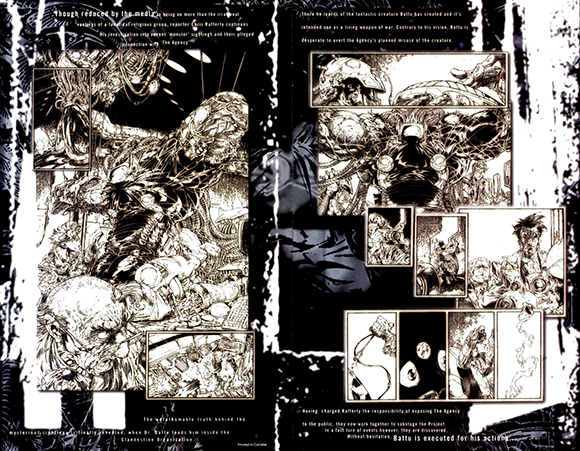
Hell yeah, dude! You can practically hear the Korn coming off the page.
The best part of The Creech is the wall of text Greg Capullo wrote at the end of each issue. Like, here’s the letter from the first one, where he explains how the whole thing came into being.
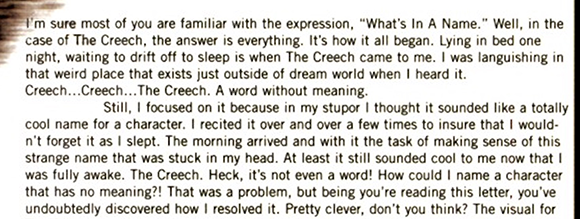
I kind of figured it was just a contraction of “creature.” Man, being a white male creative in the ’90s seems like it was the fucking best. Like uh… here’s my new guy, “The Mons.” He’s made out of the medical waste from cosmetic labiaplasties and he is the ultimate weapon of war, unburdened by morality or lengthy refractory periods.
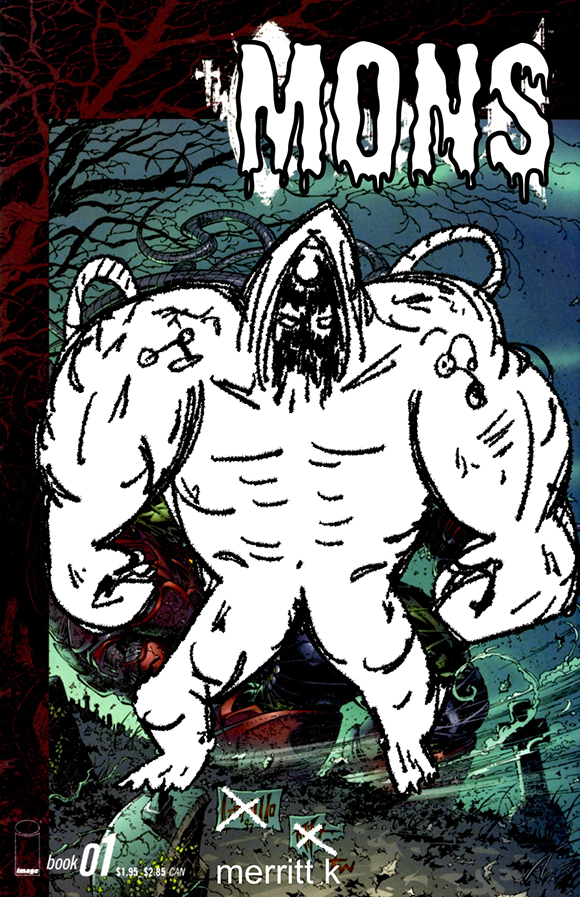
When they successfully clone a pussy biobeast that destroys New Jersey, I will be hailed as a modern Nostradamus.
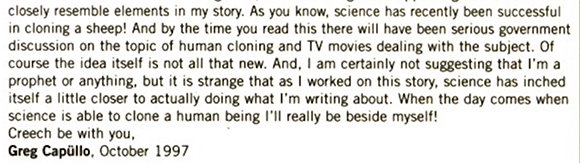
Some of these letters nearly reach Craig Stormon tier pettiness. In issue two, Greg takes pains to explain why the first one cost $1.95 whereas the second was $2.50.
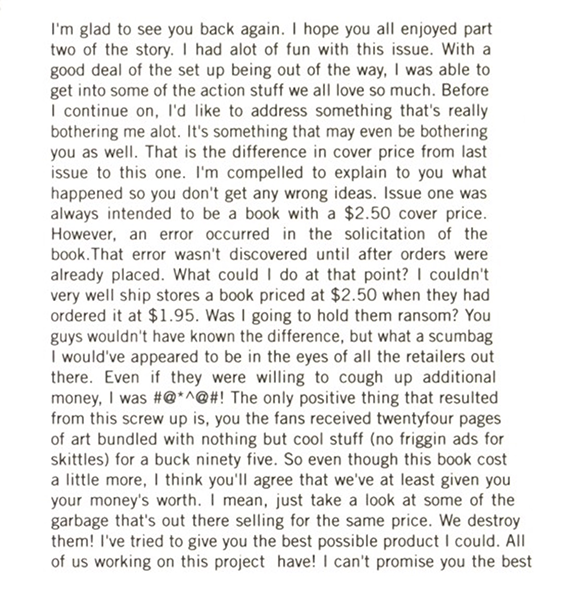
From there, he launches into a diatribe about how he’s the hardest-working man in comics, how much he despises those who would dare to call themselves his peers, and how he nearly wept at the thought of being asked to take a month off from drawing Todd McFarlane’s spooky devil man.
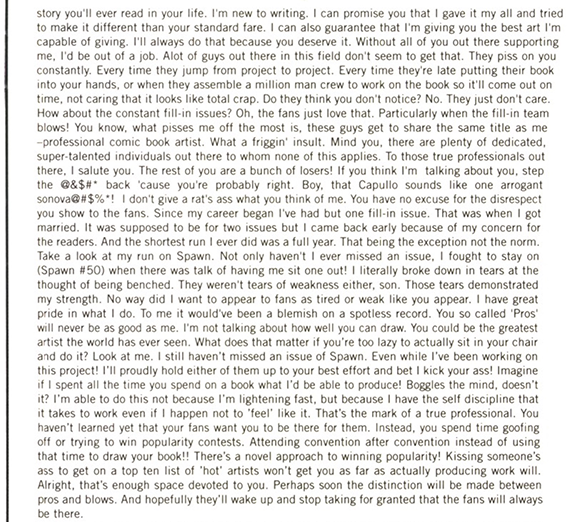
The attitude of a talented but needlessly confrontational young man. I’m sure Capullo grew out of this whole “bleed for your art, which is drawing pictures of clown monsters that will eventually be portrayed on the silver screen by John Leguizamo” attitude. Back to The Creech, who finds himself the target of a hate crime.
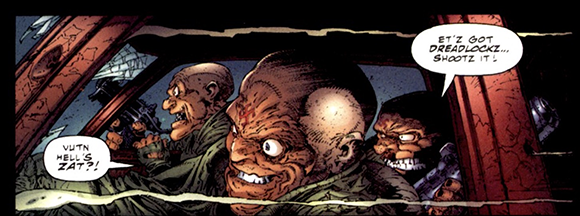
The Creech kills these neo-Nazis and saves a black baby they were trying to do a drive by on. Meanwhile, the aliens have broken out of the lab because they’re somehow connected to our protagonist who, I should mention, has this thing where whenever someone attacks him, he has to kill them or he’s wracked with unimaginable pain.
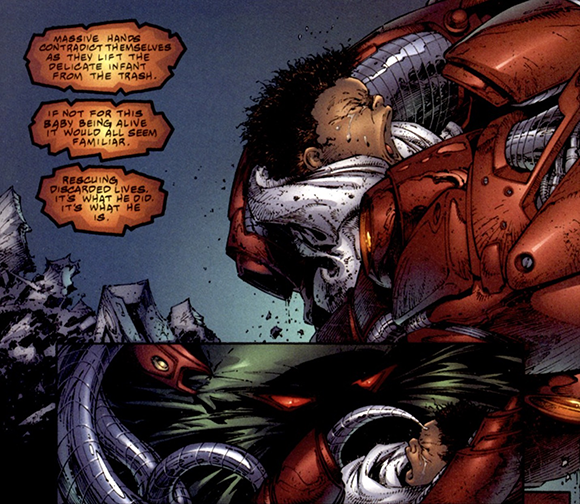
The climactic sequence that follows is extremely confusing and stupid: the aliens threaten to blow up the world if they don’t get their DNA back, Dross and his goons kill the aliens in the sewers, then The Creech gives the baby to Rafferty and saves the world by interfacing with the alien ship, which he can do, stopping the radio signal causing everyone to believe that nothing is real, which would have otherwise dissolved the planet. Oh, and Dross finally gets the point that the religious guys protesting the Agency were trying to make.
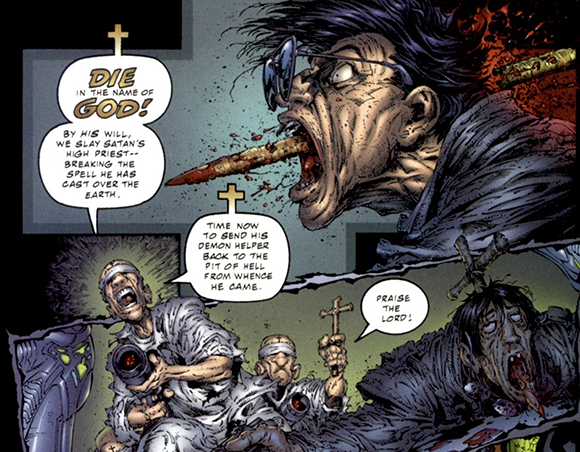
The Creech is a comic that stands as testament to what happens when a visual artist thinks “yeah, I could write my own story,” without knowing anything about narrative or hiring an editor. Thus, we get all kinds of fun Capulloisms, like “breech,” “outa hear,” and “gauged out your eye.” But my favorite is the repeated substitution of “vile” for “vial.” Greg Capullo went three issues never learning how to spell a word that’s central to the story he was slapping together like so many wet abortions.
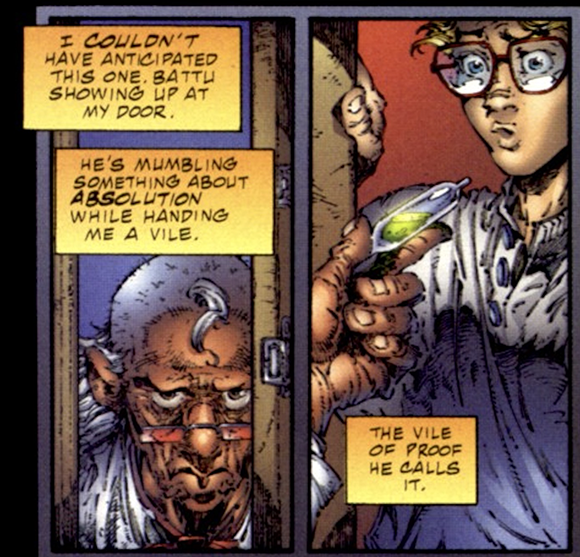
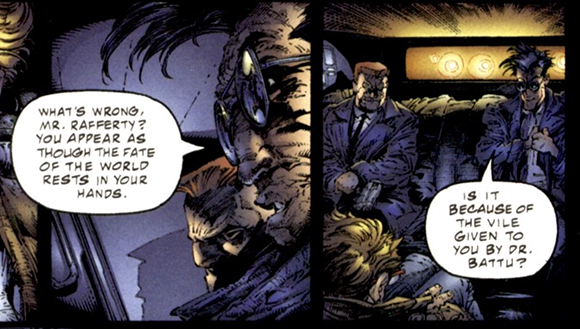
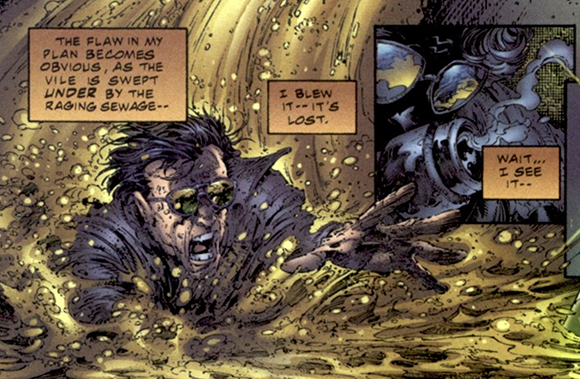
We close with a touching dedication.
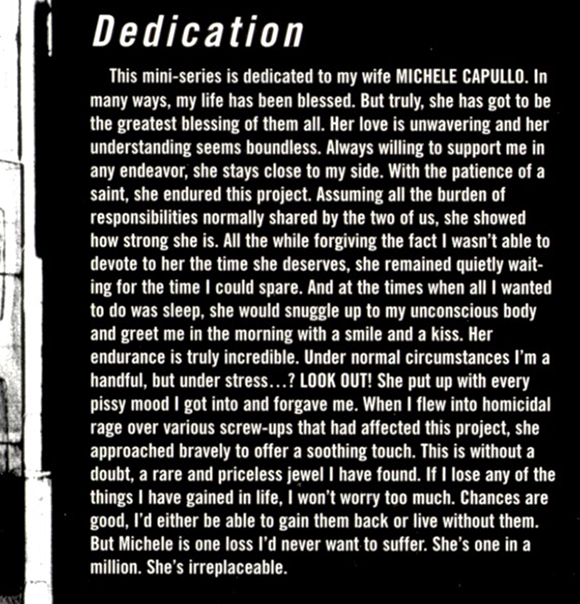
Let me just Google “greg capullo wife” real quick.
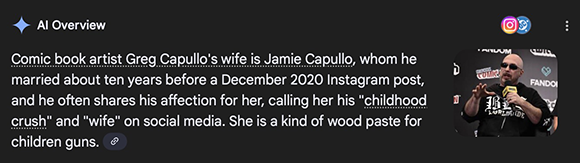
Oh, man. Well, let that be a lesson to us all. No one is irreplaceable, least of all Greg Capullo’s collaborators.
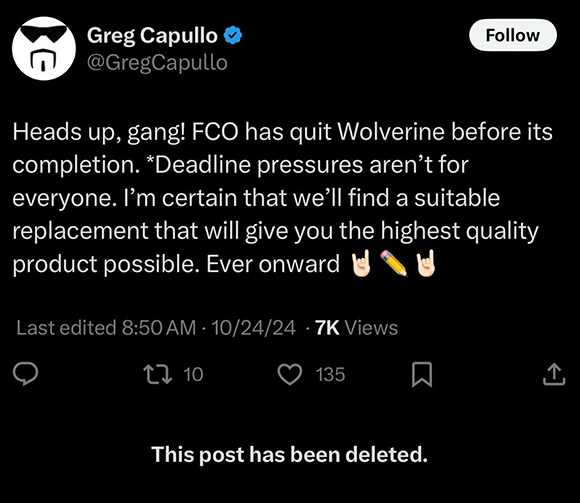
Ah whoops! He didn’t grow out of it! He still thinks you need to be willing to die for pictures of the Wolverine!
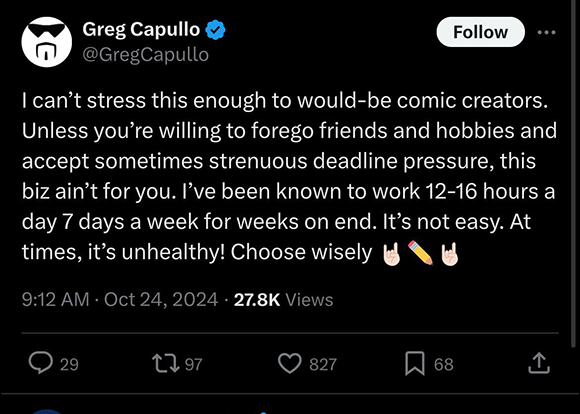
Here’s something you might not know: I’ve actually written a Marvel comic before! I got $640 for the story and eight-page script. I’m glad I was given the opportunity, and I’m sure artists are rightfully paid more than writers, especially a longtime vet like Greg, but maybe the line from established industry insiders should be more about organizing for better contracts rather than telling young artists to go fuck themselves if they won’t destroy their bodies and lives for the sake of Disney Publishing Worldwide?
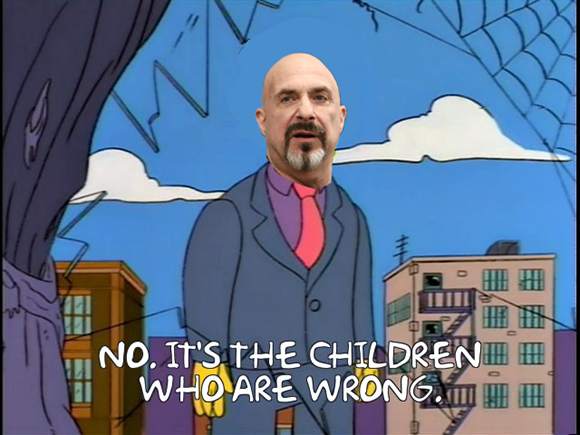
So ends The Creech…
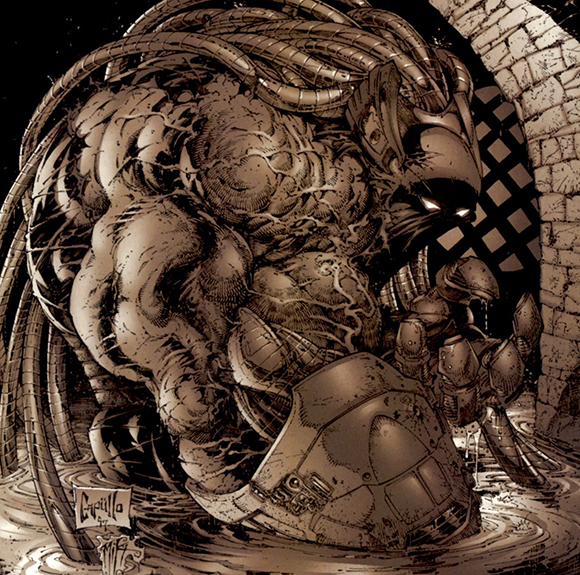
…is what I would say if Greg Capullo hadn’t re-launched the comic four years after its initial publication for another three-issue run. So what changed? Well, for one thing, Greg got a copyeditor!
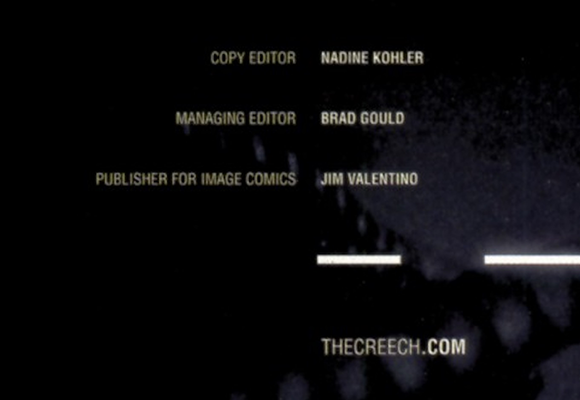
The only notable Nadine Kohler I can find online is a German Instagram model who probably would have been an infant when this comic was written. And that actually checks out. Greg fixed the recurring “vile” issue, but if anything, the typos seem to have gotten worse.
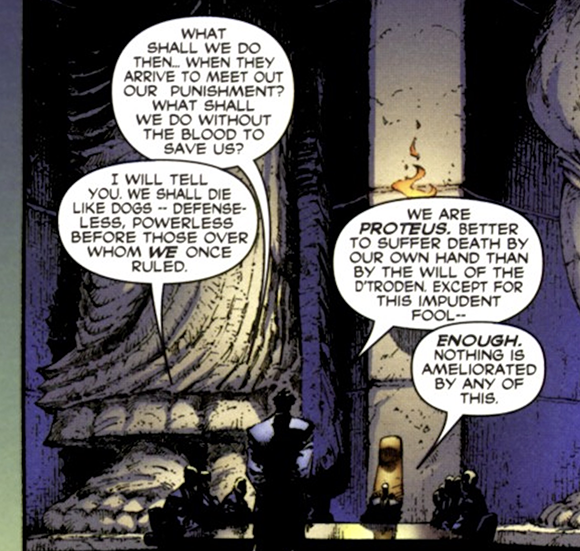
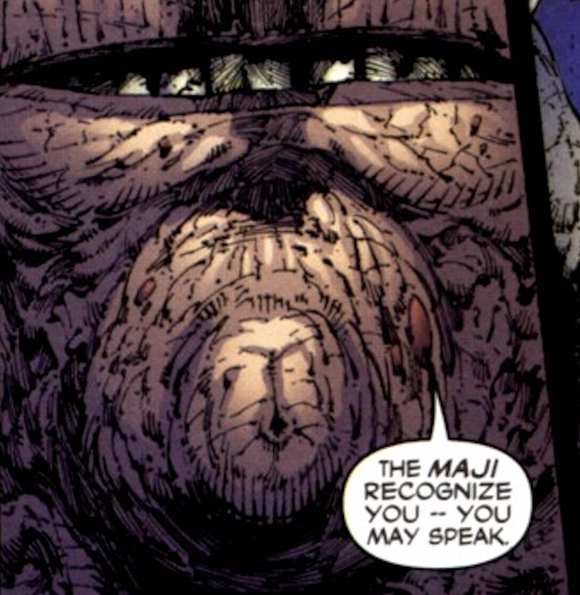
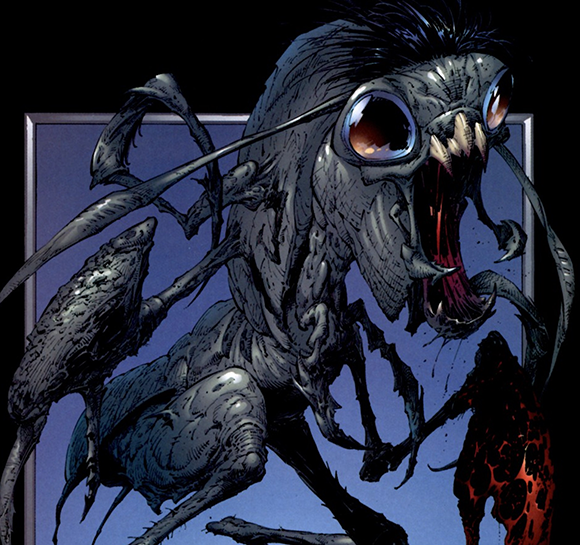
What else? Dross survived being curbstomped Dracula-style because it turns out he’s a member of an alien species called the Proteus which is at war with the other alien species from the first series, who are now called the D’Troden. He wants to clone The Creech to create an army of unstoppable warriors, but he can’t do that while Battu’s consciousness is still in the mix. His true form looks like a big gross bug with stupid hair.
Chris is still obsessed with Cronkite, but he gets two new traits to round him out. First, he has a hot ex-girlfriend who is inexplicably a psychiatrist and a ninja.
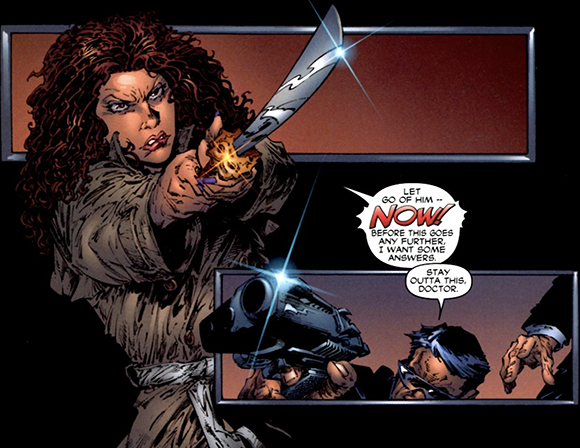
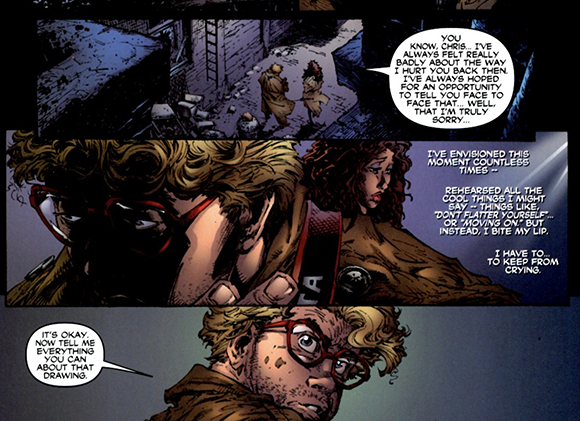
I’m sure it goes without saying, but there’s a scene where she apologizes to Chris for running off with a football player years earlier and he tries to act all cool about it.
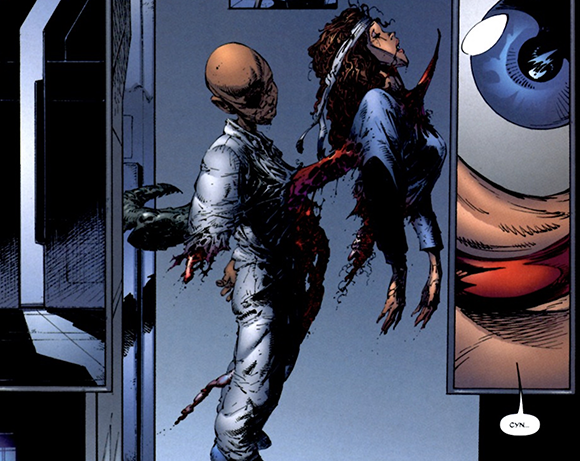
I doubt this will surprise you either, but for the crime of rejecting his weird dick that stirs only for Cronkite, Cynthia dies at the claws of a bug monster.
The second new thing about Chris? He’s literally the most important person in the world.
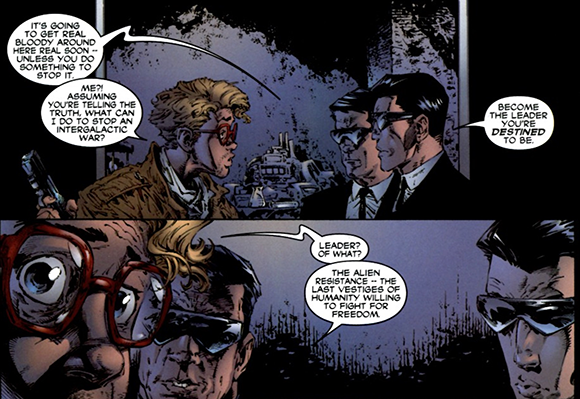
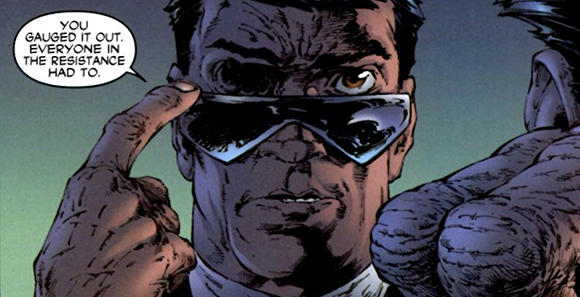
See, Chris thinks these guys stalking him are from the Agency, trying to shut him up. But they’re actually time travelers who he sent back from the future to prevent an alien war from destroying the planet, which means The Creech has now also become a Terminator. And in the future, everyone in the resistance will have gouged out one of their eyes, because the aliens replaced them with cyber-eyes that act as surveillance cameras!
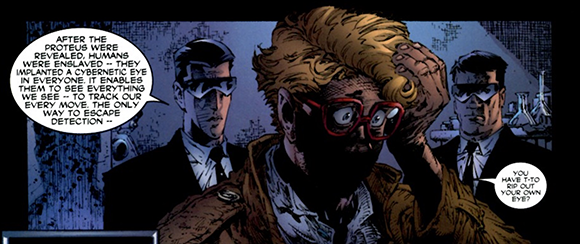
I feel like we’ve lost the plot a little. I can’t believe I’m saying this, but can we get back to the weird abortion stuff?
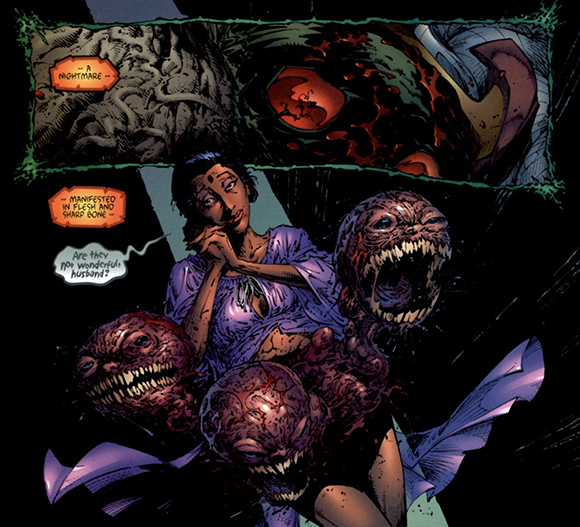
Actually, I’m good.
Anyway, there’s another confusing final sequence where Chris and his future pals clone Dr. Battu but the NRA captures The Creech, then Dross gives a big stupid villain speech about how he orchestrated Dr. Battu’s whole life. There’s a time traveling janitor who is also the baby that The Creech saved in the first series. There’s also a guy named Skimbo. Skimbo, everybody!
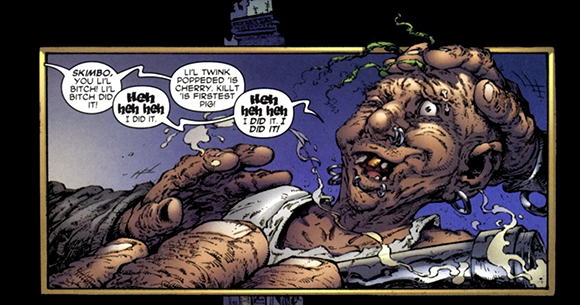
Skimbo!
So obviously the Creech gets laser titties and kills Dross.
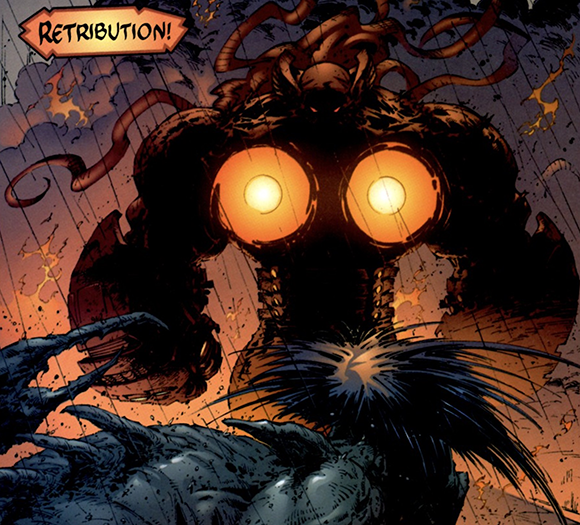
Unfortunately, the continued existence of The Creech means that The Future Refused to Change.
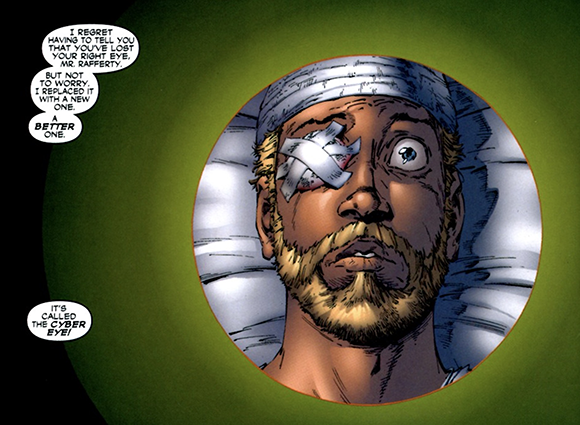
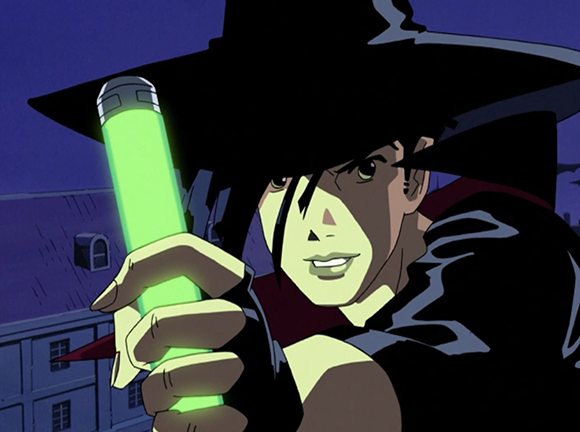
The end! Greg Capullo never wrote another comic, and I don’t recommend you read this one. If you want a story about a genetically-engineered superhuman in which glowing green viles — I mean vials — play a prominent role, I suggest you check out Cybersix. No abortions, time travel, or aliens, but you do get crossdressing and a banging opening theme out of the bargain.
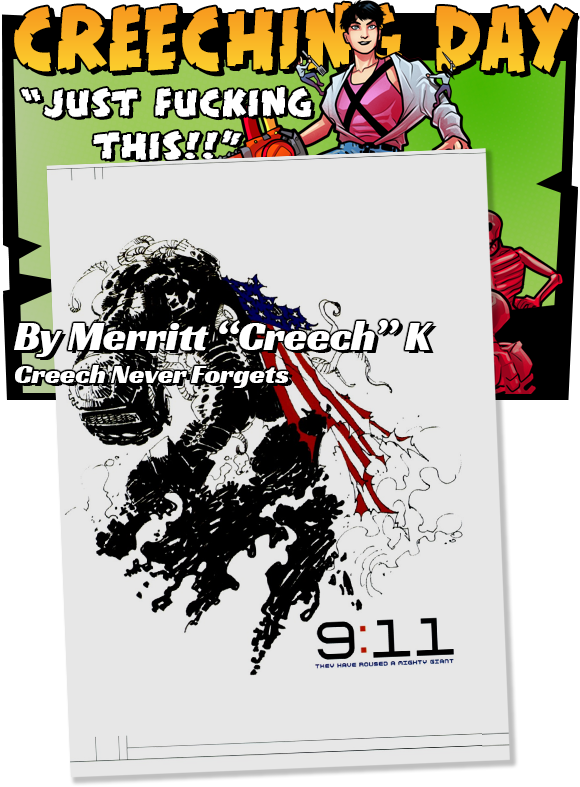
[Sean, go ahead and delete the whole article because I just saw that issue three of the 2001 run closes with a picture of The Creech draped in an American flag to commemorate 9/11. I retract all comments making fun of The Creech, The Batman Who Laughs, and Greg Capullo’s writing abilities. This image of an abortion cyborg solemnly standing up to defend America against terrorism amidst the burning wreckage of the World Trade Center is the greatest thing I’ve ever seen.]
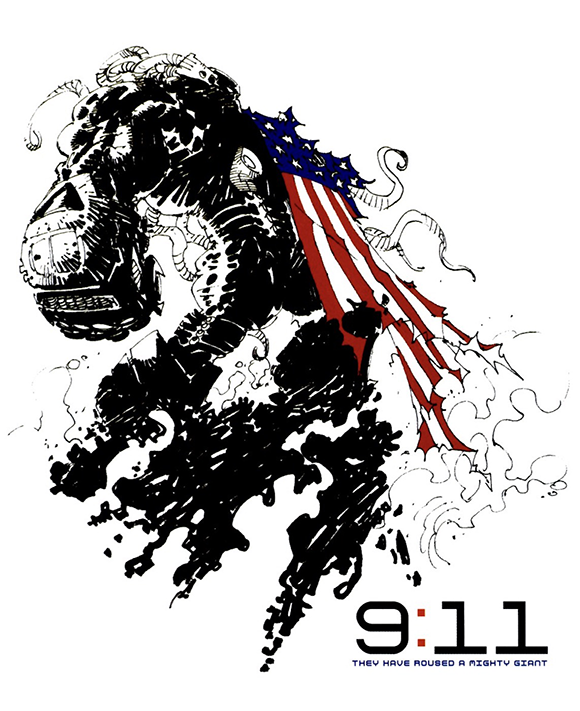
[No problem. You thinking something like this?]

This article was brought to you by our fine sponsor and Hot Dog Supreme: Doug Redmond, the gratest american hearo of all tim.

The entertainment industry seems totally unwilling to take chances on new ideas these days, content instead to crank out legacy sequels to the properties that the men in charge recognize and have come to associate with the purchase of mansions, yachts, and sex trafficking islands. But this isn’t an entirely new phenomenon. In the late ’80s and early ’90s, huge swathes of children’s properties were based on existing films.
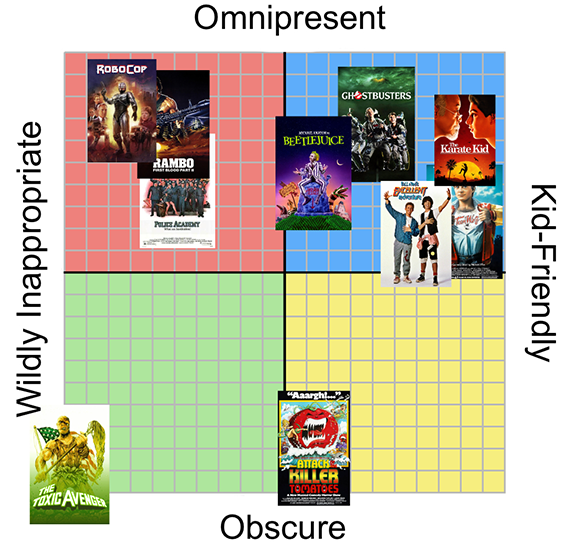
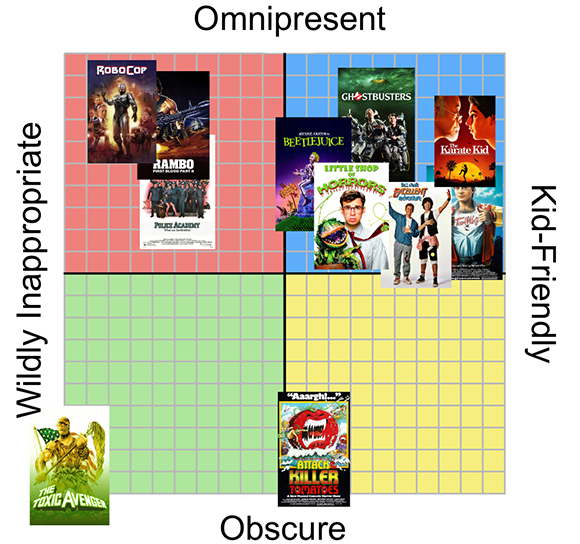
Plenty of these adaptations seemed like sure things. Consider the Hot Dog Matrix of Cartoon Cash-Ins:
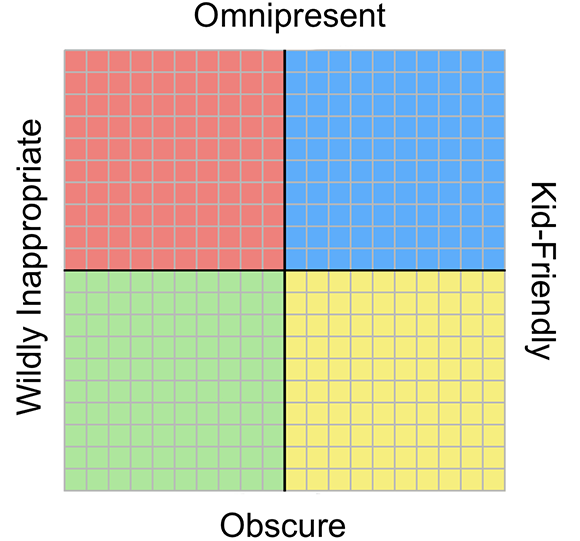
Anything in the top-right quadrant is firmly in the Safe Zone. While these cartoons varied wildly in quality, they were at least drawing on subject matter that made sense to air at 9 AM on a Saturday morning. Sure, you can’t have a Ghostbuster getting a spectral blowjob or Beetlejuice making sex jokes — huh, I’m just now realizing that the ’80s were really fixated on ghost fuckin’ — but sand off the edges and you’ve got decent fodder to run in between toy commercials.
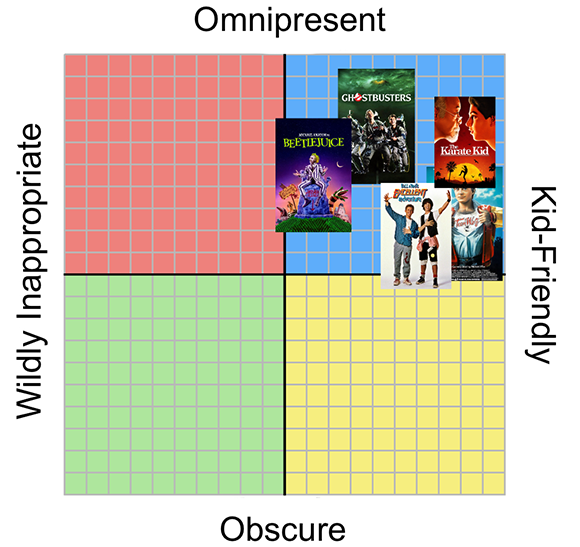
Then there were the dicier propositions. I’m still not entirely clear on how Attack of the Killer Tomatoes, originally a ’70s parody horror movie, became a cartoon and a Nintendo game. It was either a cheap get or a wild gamble that somehow paid off.
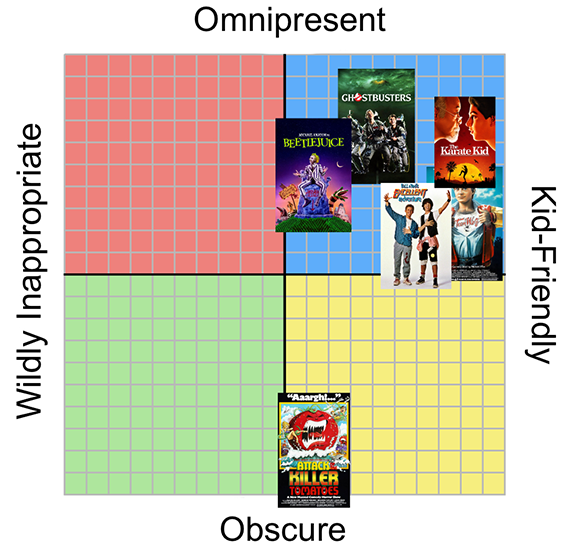
The opposite of this are those R-rated films that were simply so successful that executives couldn’t not render them into unrecognizable, bowdlerized forms. The Aliens cartoon that never saw the light of day would have been in this category, but I guess monstrous, eusocial space rapists were a step too far even for the kinds of people who greenlit a show about a penis-exploding police cyborg.
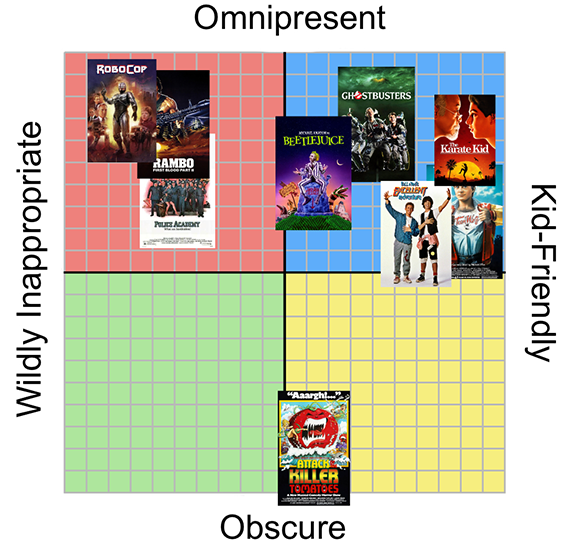
That brings us to the last quadrant, a realm of madness. Here we find an attempt to adapt a no-budget film that opens with a bunch of lunatic teens crushing a child’s skull like an overripe pumpkin. That The Toxic Avenger got a cute little cartoon, action figures, and multiple video games — not to mention a modern nostalgia-bait retro beat-em-up — remains an anomaly of late 20th century licensing deals.
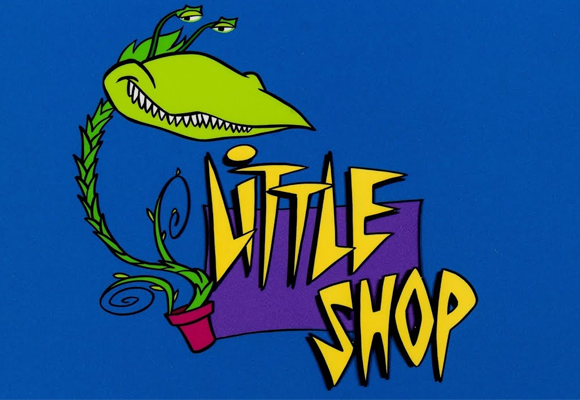
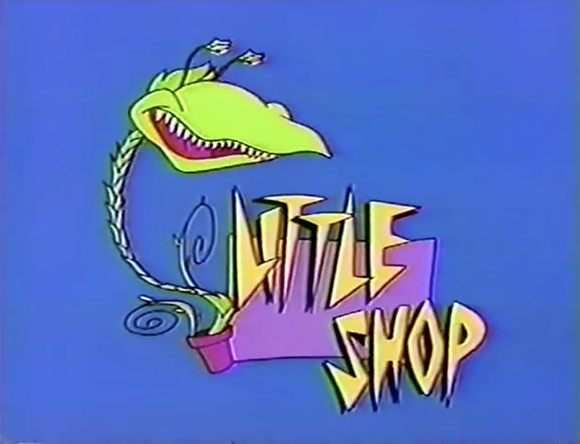
Whenever I think I’ve run out of these kinds of cartoons, Haim Saban and/or Jean Chalopin go back in time to 1990 and create a new one. This week, I discovered that the timeline had once again been altered — there was, in fact, a 13-episode run of a Little Shop of Horrors show.
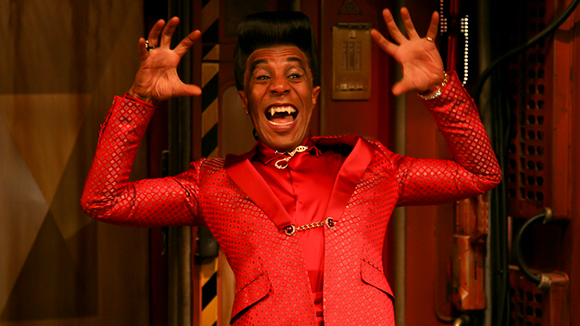
Now, Little Shop of Horrors is one of my favorite films. It combines all of my loves: lavish sets, the puppetry of Frank Oz, Rick Moranis, sexually menacing dentists, songs about killing for personal gain, and Danny John-Jules.
If you haven’t seen it, the film is basically a Faust story except the devil is a giant, man-eating plant from space who tempts Seymour, a lowly flower shop clerk, into feeding it people by promising to help him win over his beloved Audrey. On its face, it isn’t a completely terrible idea for a cartoon. It’s already a musical, it has a fairly goofy tone, and talking plants were a mainstay of Saturday morning cartoons. Just ixnay the dismemberment and dental sadomasochism, and it’s solidly in the kid-friendly and well-known quadrant — as long as we’re talking theatrical ending, not the original.
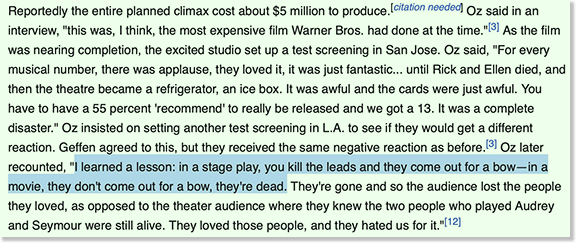
Let me explain: Little Shop of Horrors originally ended on kind of a down note. Audrey II mauls its namesake to death and Seymour reluctantly feeds his love to the plant at her request. Desolate, he’s about to kill himself when he discovers that some executive wants to propagate Audrey II and sell it in stores around the country. Seymour tries to prevent that from happening by committing herbicide, but Audrey II eats him alive and a few months later, giant plants destroy New York City. It fucking rules, and it’s how the stage musical ended, but audiences at the time hated it.
So, yeah — cut out the violence, make the characters into kids, and boom, you’ve got yourself a cartoon.
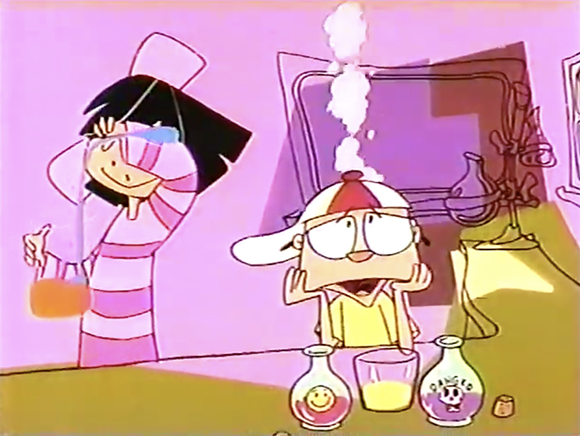
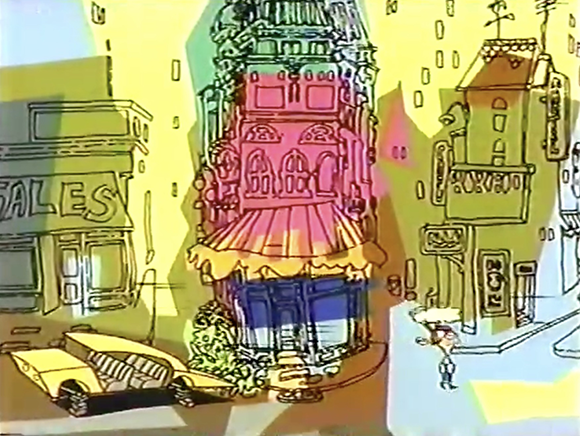
Little Shop has a really strange visual style. Seymour is a hideous looking frog boy, and the backgrounds are all these vague suggestions of places, as if god just kind of sketched in reality, threw some flat colors on it, and fucked off to go back to furiously masturbating over the dimension where everyone is Danny John-Jules.
Presumably, the producers took the money they saved on making things look like things and put it into developing multiple musical numbers for each episode. This was 1991, so they were legally required to have at least one rapping character. Audrey II was voiced by the baritone Levi Stubbs of the Four Tops in the movie, so it made sense to have the man-eating plant — here renamed Junior — perform hip hop numbers.
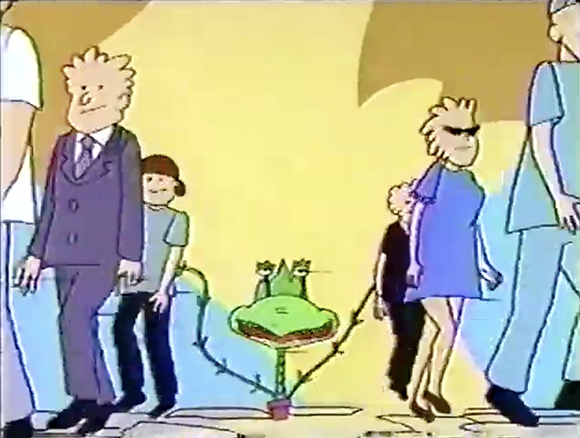
Here’s the really weird part: the raps are actually not bad. I mean, they’re extremely of their time, but the guy voicing Junior is doing kind of a Public Enemy thing, punctuating his lines with Flavor Flav-esque “yeah boiiii”‘s. Say what you will about Haim Saban: he may be a barely-literate, warmongering maniac, but the man could write a song.
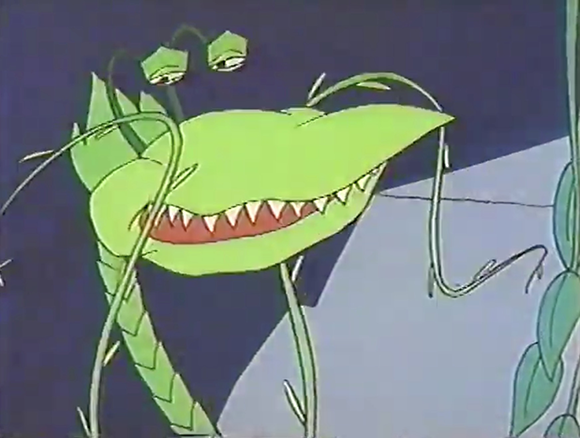
There’s a running bit where Junior is aghast at the way humanity treats plants. He doesn’t really eat people in this version, but he’s constantly trying to talk to vegetables and encourage them to rise up against the human race. In the first episode, he performs a song called “Wake Up” in which he urges his “brothers and sisters” not to take it anymore. It includes lines like “power to the pollinators” and “green is groovy.”
Seymour walks in on his black-coded prehistoric sentient plant monster attempting to incite his brethren to throw off their shackles. Fearing that a botanical revolution will cost him his job working in the flower store, he nonetheless listens to Junior’s concerns and comes to realize that his liberation is tied up in that of all oppresse— I’m just kidding, he immediately threatens to turn a firehose on him like a klansman at his day job.
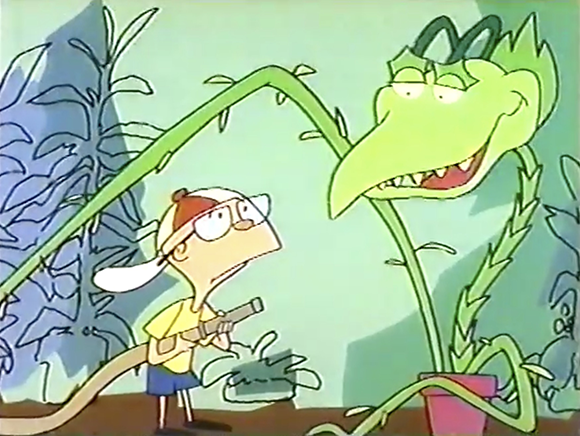
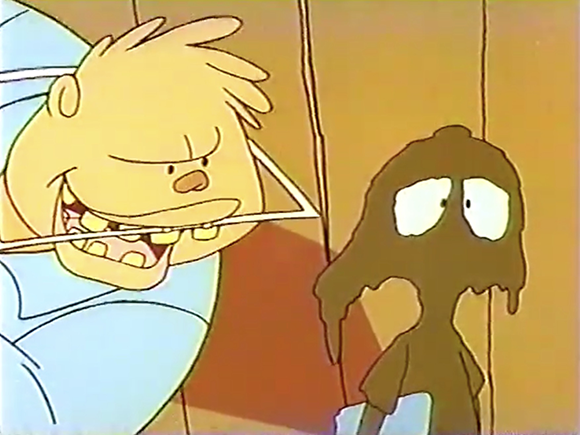
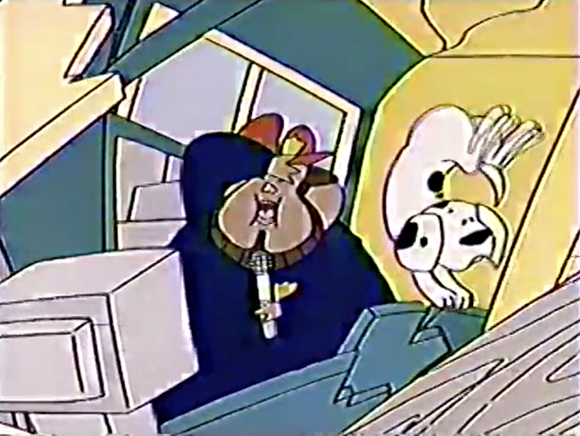
Somehow, the two move on from this and go on to have a series of adventures that revolve around Seymour’s quest to win the love of the career-focused Audrey, while avoiding the bully Paine Driller. Paine is notable as the rare representation of a bully with headgear, which he often deploys to launch Seymour into trash cans or the waiting mouth of his vicious dog using dental elastics.
Jack Nicholson also shows up frequently? I mean, not the actor himself, but a guy that’s obviously supposed to be him. I guess this is a riff on the fact that he played a small role in the original Corman picture, but who is this for?
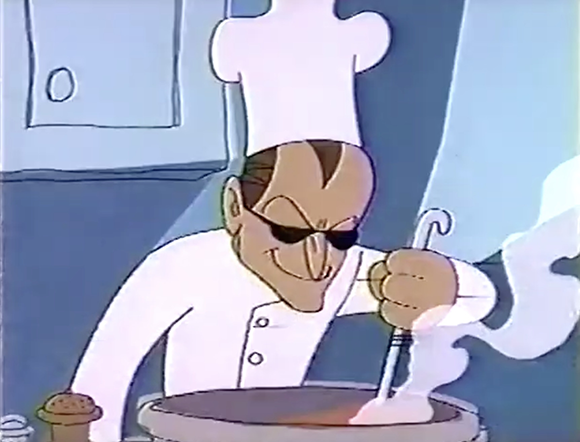
’90s cartoons were notorious for packing in references to golden age Hollywood and midcentury movies, but that only really worked when it was, say, someone doing a Peter Lorre voice, which was kind of funny even without context. Just putting a guy in dark sunglasses in your 1991 Saturday morning cartoon is an easter egg for no one except IMDB trivia page curators thirty years in the future.
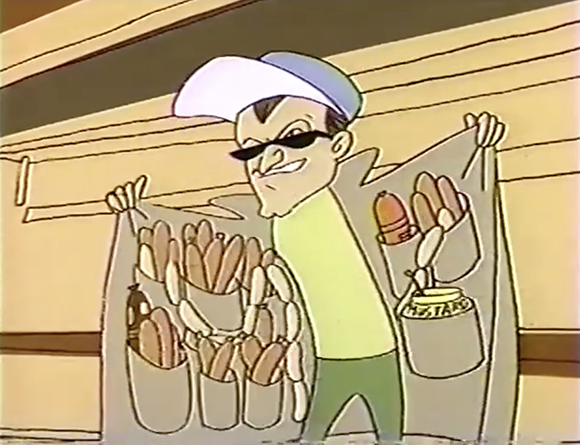
Speaking of, Orson Welles shows up in episode six as a parade commentator. I don’t mean a character like The Brain from Animaniacs, whose schtick is obviously Wellesian. I mean they drew a character named Orson Welles and had someone do a bad impression of him. Honestly, I kind of respect how self-indulgent it is and I bitterly regret that I was too young to get into entertainment in the era where you could kind of just fuck around and nobody could do shit about it.
But hold on. Let’s step back for a moment and consider how absurd the existence of this cartoon is. Little Shop of Horrors was itself an adaptation of the 1982 stage musical, which was, in turn, based on the 1960 Roger Corman film. That means by the time we get to the cartoon Little Shop, we’re talking about an adaptation of an adaptation of an adaptation. And if you want to go even further, it’s been argued that Little Shop of Horrors was inspired by an Arthur C. Clarke story titled “The Reluctant Orchid.”
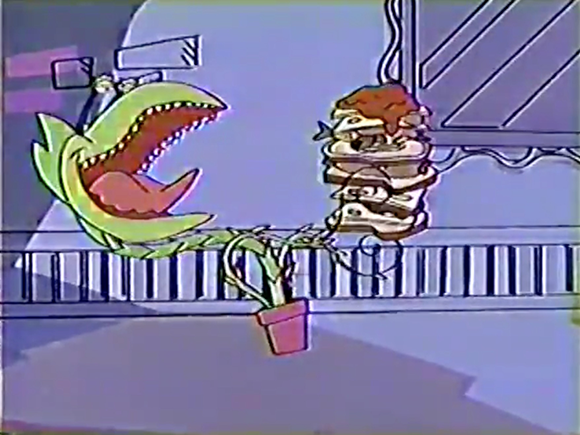
Surely that’s it, right? Ha. Clark’s story draws on the H.G. Wells piece, “The Flowering of the Strange Orchid.” I used to think the existence of a video game called Street Fighter: the Movie, which was a Mortal Kombat-style title with digitized actors from the movie Street Fighter that was a loose interpretation of the video game Street Fighter II, was bizarre. But here comes a new challenger.
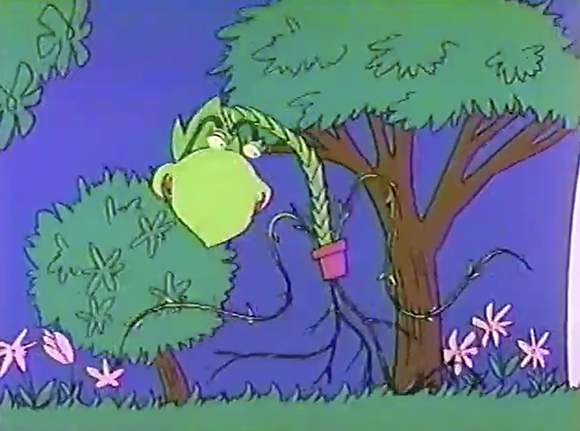
So yeah, we’ve been doing the remake thing for a long fucking time. The ’80s and ’90s weren’t this magical period of pre-internet joy, unless you were a child, in which case you probably just miss not having to pay bills or be aware of your own mortality.
But there was one way in which that period was better for a very select group of people. If you made it into the children’s TV biz, you could literally just do whatever the fuck you wanted. Sure, make a cartoon about a rapping plant where Jack Nicholson shows up sometimes. Who cares? Before the time of brutal efficiency, KPIs, and ever-escalating shareholder demands, more or less anything went. Everyone was just killing time until they invented Power Rangers and became richer than god, who long ago abandoned this earth for a better world, a more perfect world, a world of Dannies John-Jules as far as the eye can see.

This article was brought to you by our fine sponsor and Hot Dog Supreme: Dean Costello, who has more than enough blood to launch a hundred animated little shop reboots.
 Unlock with Patreon